Company outing in bad weather: what changes and how do you prepare?
You’ve been looking forward to it for months. The company away day is planned, the venue is booked, the programme is in place and you’ve carefully allocated the staff budget. Then the weather app slowly starts keeping you awake at night. Showers are forecast, there could be strong winds and even a chance of thunderstorms. With every alert, one big question looms larger: what if bad weather literally washes out the company away day?
As an HR or office manager, organising a company away day comes with a lot of responsibility. Everyone needs to enjoy it — you’re probably already feeling the pressure. You may not yet be an experienced event manager who routinely includes weather contingency plans on the checklist. You’re organising this alongside your regular duties, with care and commitment, but also with everything else already on your plate.
At InnStyle, we’ve been organising business events for 30 years, from intimate team outings to gatherings for 500+ guests. We know exactly how it feels when the weather forecast suddenly takes centre stage. And we know what you need at that point: not a vague promise that "we’ll sort it out", but a concrete answer to the question keeping you awake.
In this article, you’ll find out exactly what changes in bad weather, which decisions are made when, which activities always work and why rain really doesn’t have to spoil the day at a well-prepared venue.
Bad weather during your company away day: a realistic scenario
The Netherlands simply has unpredictable weather. Particularly outside the summer months, there’s a high chance of rain, wind or cold weather. Yet weather conditions rarely top the list when an HR manager starts planning an away day. The venue, the catering, the capacity: those are the first questions. The bad-weather contingency plan usually comes later.
And that’s understandable. But it’s precisely why you’ll want to have this conversation with your event producer, ideally during your initial discussions about the quote. Because the sooner you know what changes in bad weather, the more relaxed you’ll feel as the day approaches.
What exactly changes under a bad-weather contingency plan?
Change 1: the location and layout
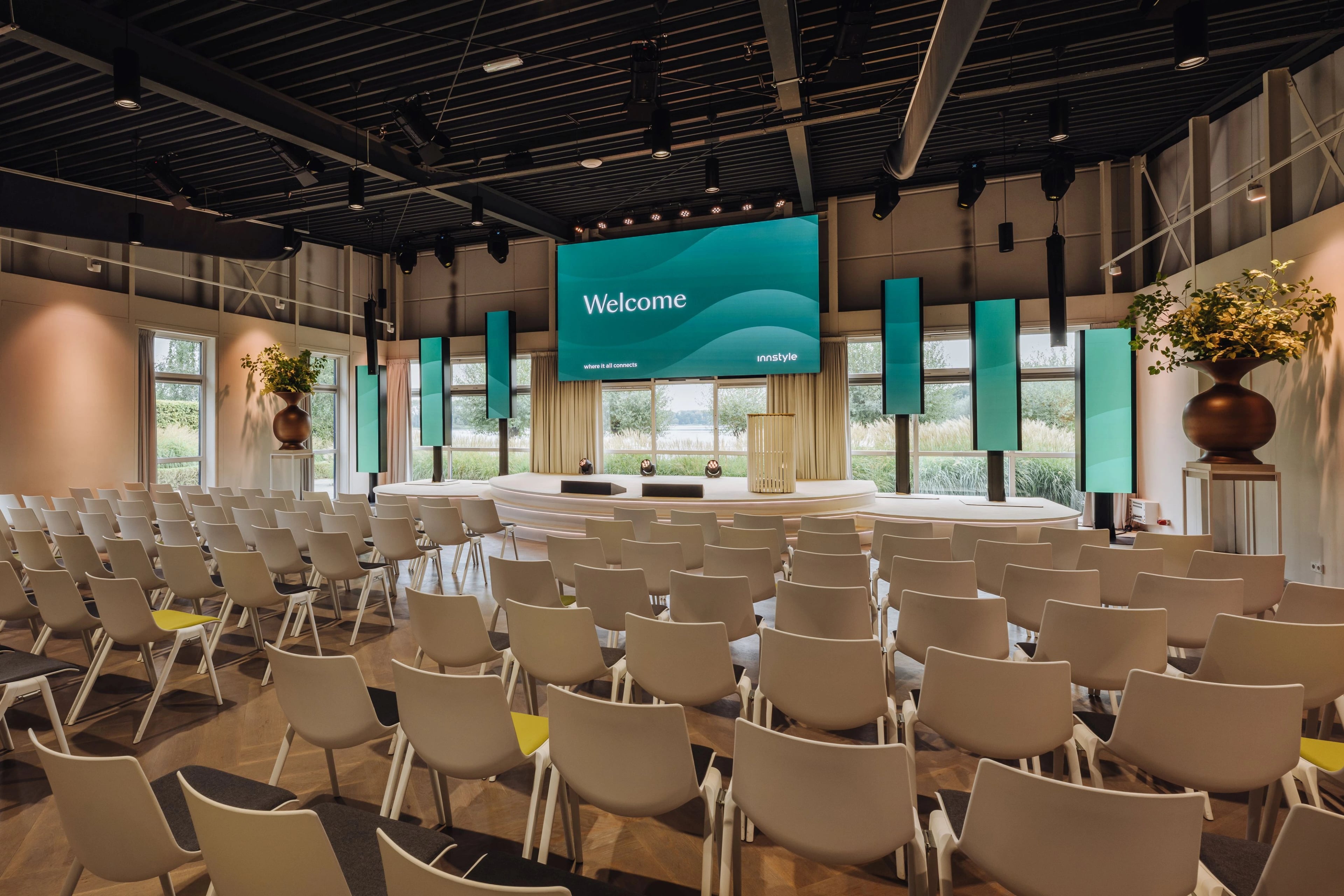
A good event venue anticipates bad weather, taking a proactive rather than reactive approach. At InnStyle, that means stretch tents in strategic spots, a covered terrace as a buffer and enough indoor space to accommodate guests comfortably. We regularly use these tents to get ahead of bad weather, not as an emergency solution but as an integral part of the plan.
What largely stays the same is the atmosphere, the structure of the day and the programme. What changes is where certain parts take place and how guests move around the venue.
A good example: at our recent event for a large financial organisation, the barbecue was still grilling outside, but we served the food indoors. That way, guests enjoyed the atmosphere of an outdoor event without getting themselves or their food wet in the rain.
Change 2: the activities
Bad weather almost never means activities are cancelled. It means they are adapted. An outdoor walk still goes ahead, but extra umbrellas are ready for the group. A workshop that would normally take place outside moves indoors without compromising the experience.
There is one golden rule here: a realistic programme for the time of year is half the battle. In March, you do not plan an outdoor lunch as a fixed part of the programme, but as a last-minute bonus if the sun does come out. If not, everyone stays comfortably indoors.
Change 3: the type of guest makes a difference
Not every group feels the same way about rain. A team of staff who normally work outdoors will put on a coat without complaining and carry on. A department that spends every day at a desk, on the other hand, will appreciate those extra umbrellas and a dry welcome all the more.
We once organised a dragon boat race in November while it was pouring with rain. The organisers simply said: let's go for it. And the men taking part put on thick coats and loved it.
‘Sometimes you worry about things that your target audience has no problem with.’

How proactive is an event producer when the weather is changeable?
What can you expect in terms of communication beforehand?
A good event producer does not wait for you to call about the weather forecast. They start thinking about the bad-weather scenario as soon as the enquiry comes in. Questions such as: what time of year is it? What type of guests are attending? What is the available budget? Can you move the activities indoors? All these answers shape the bad-weather plan.
At InnStyle, it works like this: the account manager handles the initial planning, and once the client has signed, the event is handed over to the producer. They go through the details with you and develop both a good-weather plan and a bad-weather plan. On the day itself, an event director is there as your point of contact. You no longer need to give it any thought.
Who makes the decision, and when?
There is a fixed point when the running order is finalised: eight working days before the event. This is the final meeting to discuss the details, when decisions are made and confirmed. After that, changes are minor - any dietary requirements, an allergy or the addition of an extra microphone. Major programme changes are no longer an option at that stage.
This gives you peace of mind as the organiser. By that point, you have checked together where things stand, and after that, the plan is simply put into action. If something unexpected does happen on the day - say a hailstorm suddenly breaks out just before a session - the event director adapts accordingly. Guests are given an extra cup of coffee and wait a little longer in comfort indoors. The guests do not notice a thing.
Not everything is possible in bad weather
Let's be honest: not everything is possible in every kind of weather. Sometimes, prolonged bad weather means certain activities simply cannot go ahead safely. Water sports in a storm, outdoor activities during an orange weather warning: that's when you step in, even if the client would rather you didn't. As an event producer, I'm the one who leads that conversation.
And moving it to another date? That sounds tempting and straightforward, but it's almost never the solution. Operationally, it's complex: the availability of the venue, staff and guests, and the programme. What's more, in most cases the same costs apply as for the original event. In practice, rescheduling is the same as cancelling - you're better off investing that budget in a solid bad-weather plan beforehand.
Activities that work in any weather
The best activities for a company outing are those where the weather simply doesn't matter. Workshops, interactive sessions and indoor team-building activities offer the same connection and energy as an outdoor programme, without depending on the weather over Maarssen.
Think of:
- Creative workshops such as a drone workshop or photo session
- Interactive team games in an indoor space
- Culinary experiences that bring the group together
- Outdoor walks with good waterproof gear

It also helps to make sure guests never feel uncomfortable, and that starts in the car park. At our recent event, staff were ready with umbrellas as soon as guests stepped out of their cars. A small gesture, but exactly the kind of detail people remember. Guests who arrive wet get off to a bad start. Guests who come in dry and smiling start the day on a more positive note.
A real-life example: an event in changeable weather
Earlier this year, we organised an event for a large financial organisation: around 400 guests, a morning plenary session and an afternoon of activities. It was March, and the weather clearly wasn't going to be on our side.
I kept an eye on the weather app all week. And yet the event went ahead exactly as planned, just with the bad-weather version in place. Stretch tents were set up at all the key points, extra umbrellas were ready for the group and, although the barbecue was grilling outside, we served the food indoors. Staff were waiting at the car park to escort guests while keeping them dry, and there was a staffed cloakroom.
‘At the end of the day, both the client and the guests were genuinely enthusiastic. No frustration about the weather, just positive feedback about the day. That's not just luck, that's preparation.’
All week, we hoped the sun would keep shining. But ultimately, you know: we have a plan for every scenario. And you need to convey that confidence to the client too.
Tips for HR and office managers: how to prepare for bad weather
A comprehensive bad-weather contingency plan costs a little more than a fair-weather plan alone. Stretch tents, extra umbrellas, ponchos and a staffed cloakroom are real costs that will appear in the quote, but think of it as insurance. The costs of an unsuccessful event, disheartened guests, early departures and negative feelings about the day are far greater than the investment in a good bad-weather plan.
Practical rules of thumb:
- Always ask about the bad-weather contingency plan when discussing a quote, even if the event still seems a long way off
- Allow some flexibility in your budget for small additions if the weather disappoints
- Choose a venue that thinks in terms of possibilities, not limitations
- Moving to another date is almost never the solution: prepare rather than reschedule
- Let people know internally that there is a bad-weather plan — it will give your guests peace of mind too
Your company outing will be a success, even in the rain
Bad weather need not spoil the fun, as long as you plan ahead. With a clear bad-weather contingency plan in your event schedule, a venue that proactively works with you and activities that work in any weather, the uncertainty disappears well before the day itself.
You organise this outing with care, on a limited budget and with the expectation that everyone will enjoy it. That is a responsibility you take seriously. And that is exactly why you deserve a venue and a team that take all the practical worries off your hands, even when the weather lets you down.
At InnStyle, we have been working for thirty years with organisers who are in exactly your position. We proactively work with you, create a robust event plan for every scenario and make sure that, on the day itself, you can relax and enjoy what you have put together. Because whether it rains or the sun shines, lasting memories are made here, by the Maarsseveense Plassen.
Would you like to know what a bad-weather contingency plan would look like for your specific event? Contact our team and we will go through it together, long before you start worrying about the weather forecast.
where it all connects