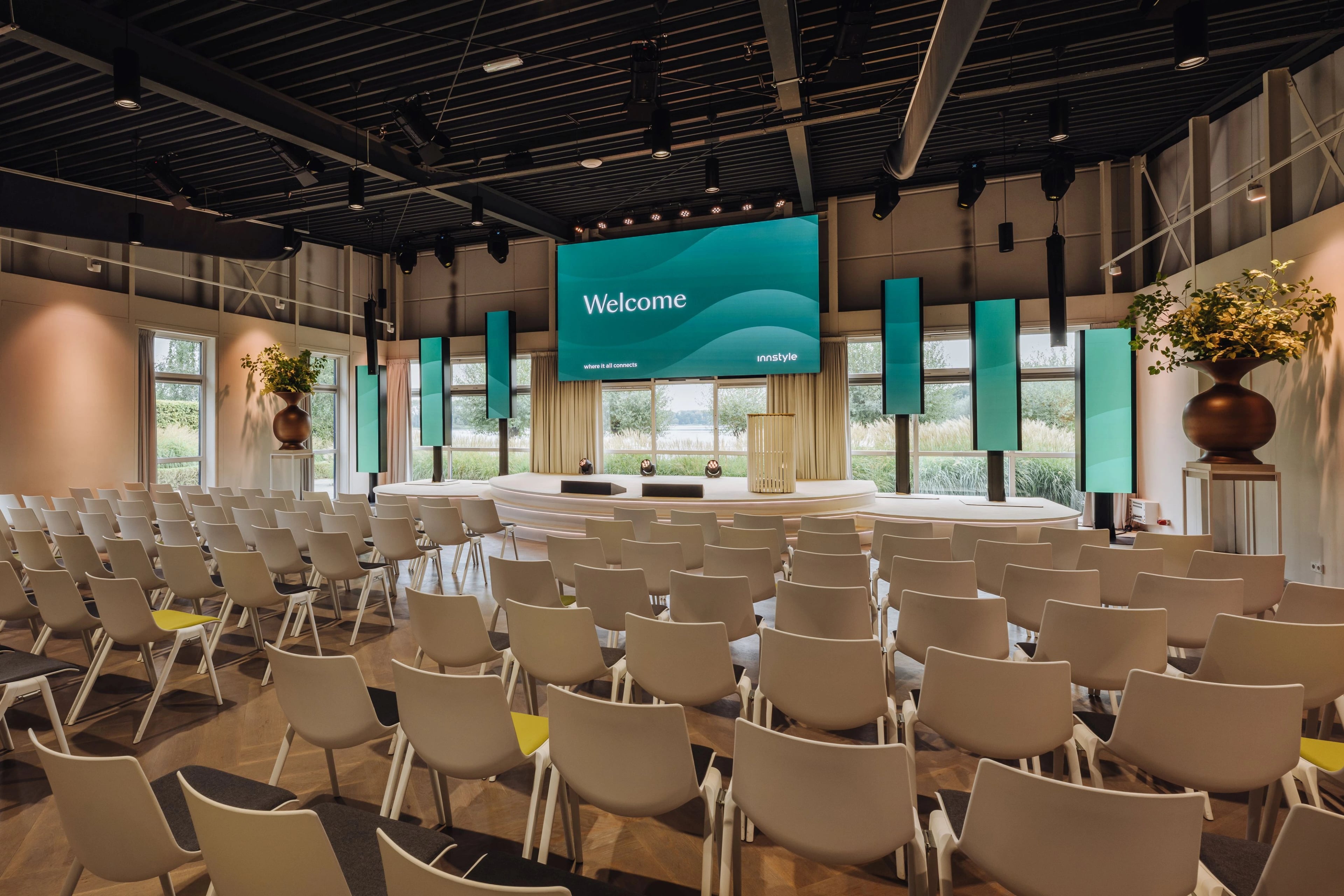
An essential part of any event: a look at event management at InnStyle
As an event manager, you regularly meet with your account manager or event producer in the lead-up to your event: you discuss the programme, put together the running order and agree on the budget, requirements and details. By now, you know that person well. But on the day of your event, many venues have someone else by your side: a floor coordinator, a duty manager – someone you have never spoken to before, but who determines how your day actually unfolds. At InnStyle, that person is called an event director.
At InnStyle, we often write about the preparations involved in organising an event. But we have not yet said much about the team that is there to support clients on the day itself. Precisely because these people are crucial to how smoothly your event runs, I spoke to four of our event directors: Shanti de Haas, Marco van Veldhuizen, Stefan van der Linden and Stefan van der Veer. Led by Tommie van Wijk, they form the operational heart of InnStyle, together with the Facilities Manager and the Hospitality Support team.
In this article, you will meet the operations team that takes over once the running order is in place. You will discover what an event director actually does, what you as a client never notice even though it keeps them busy, and why that is exactly what makes an event feel like a well-oiled machine rather than chaos.
Who are the people behind event direction at InnStyle?
None of the four came to InnStyle through a traditional 'event management qualification'. Marco comes from a very different background: before moving into hospitality, he spent some time working in the armed forces. ''I wanted to work more closely with people and make them happy,'' he explains. Others in the team have a hospitality or account management background and later made the move into events. Shanti previously worked for a leisure company and brings that experience to the activities we offer at the Maarsseveense Plassen. What unites the event directors is that none of them wants to spend all day sitting behind a laptop.
That is also exactly why this work appeals to them so much. For the event directors, an ideal working day looks very different: a challenging event where you have already organised everything thoroughly in advance, giving you a solid foundation and allowing you to respond quickly whenever the client or a guest needs something.
''With a strong running order, you know the event will run smoothly and you are already 1-0 up. That is how you make guests happy.''
That combination of thorough preparation and flexibility on the day itself is a recurring theme in the conversation with the four directors. They are the first to arrive and the last to leave, and they are meticulous enough to prepare every last detail, yet flexible enough to change everything within half a day if necessary. You can sense that adaptability within this team.
.webp)
Marco van Veldhuizen
Before the doors open: the preparation you don’t see
The event director gets involved well before the event takes place: together with the event producer, they go through the final running order, ask questions about the client’s needs and make sure they are fully briefed. This covers not just timings and numbers, but specific details too: the content on every screen, signage throughout the venue, and the purpose of the event. Is there a theme? What has or hasn’t worked well at previous gatherings? That handover and attention to detail determine how smoothly the day will run, without you having to take care of it yourself.
On the morning itself, there is another check. Suppliers and caterers are expected at a set time, and the event directors then go through the entire running order once more: is everything ready, is everyone present, is the schedule still on track? Next comes the staff briefing: who is the client, what is the aim of the day, what kind of guests are attending, and what extra service would suit this particular group? A team member who knows why guests are there can respond accordingly throughout the day, something that isn’t standard practice on a typical hospitality shift. You could say that a good event director needs ten pairs of eyes: they keep an eye on suppliers, staff, guests and the event organiser.
What you do notice as an event manager, but don’t have to deal with yourself
As well as being a constant, visible presence on the floor, the event directors offer something you can’t immediately see, but can certainly feel: calm. However well you prepare, it’s perfectly normal to arrive at an event venue full of adrenaline and a few healthy nerves – after all, this is the moment when everything has to come together. The event director plays an important role here, Marco agrees: ''After we go through the running order with the client, we see a tense contact person relax. That’s when I feel their trust in me and know that everything will work out.''
Everything you no longer need to think about as an event manager is still taken care of behind the scenes. This includes individual guests’ requests, thinking ahead to the next break while the current one is still underway, reconfiguring a room on time or taking over other tasks that you find stressful. A practical example: what if, during lunch, a guest unexpectedly mentions an allergy or dietary requirement that wasn’t communicated in advance? The team quickly coordinates with the caterer there and then, so no one goes hungry. ''It’s exactly that sense of having everything taken care of that you feel here as an event manager,'' says Stefan van der Veer.
And the details matter too. Your usual coffee order ready and waiting, without you having asked, a personal preference remembered... the more often an organisation returns, the better we get to know each other. The staff themselves are part of this too: the bar staff never stand around chatting or waiting between serving guests – that attention to tidiness and professional presentation is part of why clients keep choosing InnStyle.
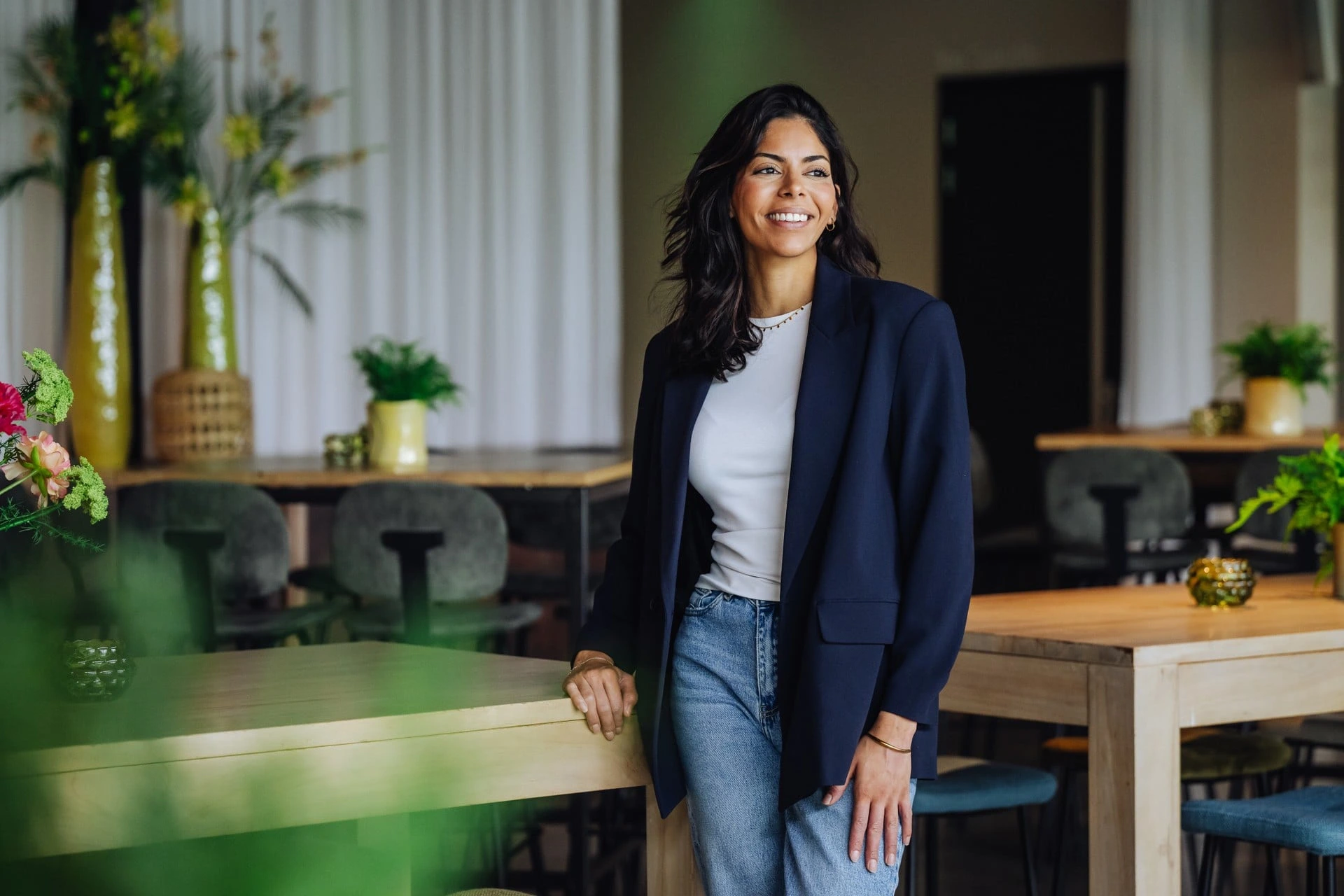
Shanti de Haas
When things go wrong: the power cut nobody saw coming
Thorough preparation is one thing, but you only see an event manager's real work when something goes wrong. Marco mentioned the power cut we experienced last summer. During an event with market stalls, TV screens and lots of technical equipment, everything came to a standstill. What then?
The event manager immediately starts looking at the options, and the entire InnStyle team comes together to resolve the situation. In the end, the event moved to another space on our grounds within twenty minutes, complete with everything it needed.
''At a moment like that, you need to know what you can expect from your team, including your colleagues in the office, and trust completely that whatever you ask for will actually be sorted. While the event manager is speaking with the client, things are already being set in motion behind the scenes. That only works when a team knows each other inside out, and you don't build that trust during a crisis, but in all the calm moments beforehand.''
What sets a good event manager apart
So what is the difference between an event manager or party manager who 'simply does a good job' and someone who truly excels? ''Looking beyond the running order,'' according to Stefan van der Linden. The running order is the foundation, but what sets someone apart is their proactive thinking: spotting where improvements can still be made, even when the client has not explicitly asked for them. For example, extending the arrival period because heavy traffic means not all the guests have arrived yet. At a moment like that, being able to adapt is more valuable than sticking rigidly to the timings in the running order.
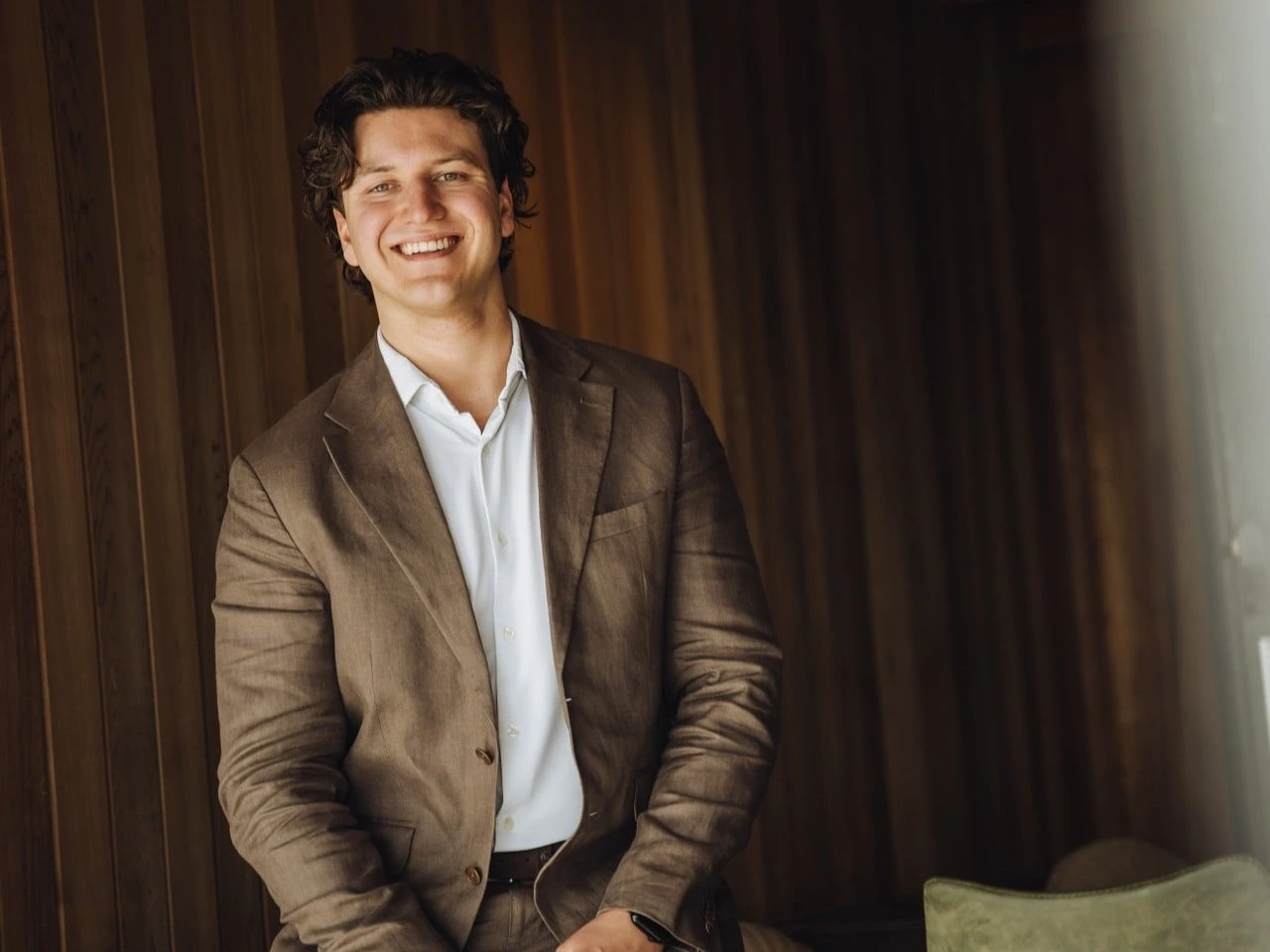
Stefan van der Veer
Where InnStyle's event managers still want to develop
The conversation ended not with what is already going well, but with where the team themselves still want to make progress. For Marco, that is mainly about continuing to innovate: from the packages to the technology to the furniture at the venue.
''Standing still is not a phrase we know here.''
In practical terms, this currently includes thorough maintenance of the grounds and keeping an even closer eye on market trends: what are other event venues doing, and what can we adopt or do better? The team is also looking at how to resolve recurring issues more quickly, so that improvements are already in place for the very next event.
For you as the client, that means an ambitious team that is there for you, never stands still and keeps looking more closely at ways to make your event even stronger.
Five tips from the event directors for a smooth event day
The conversation also brought out practical advice you can put into practice as the client:
- Tip 1: share your wishes as early as possible - the more the event direction team knows in advance about your goals, your guests and your expectations, the better they can respond, even if something changes on the day itself.
- Tip 2: have one clear point of contact - particularly in larger organisations with several people involved, one point of contact works better than a group of five or eight people who all want to share their own ideas during a venue visit or a discussion of the event schedule.
- Tip 3: if in doubt, just get in touch - uncertainty about the details of your event is not a reason to wait, but a reason to discuss them straight away. That way, you avoid surprises later on.
- Tip 4: allow for rush hour if you are starting early - particularly for internal events, traffic can delay arrivals significantly. Let your guests know in advance so that a session does not have to start late.
- Tip 5: actively confirm attendance at internal events - guests are more likely to cancel for internal gatherings than for an externally organised event where they have to buy a ticket. A quick reminder or a round of phone calls prevents disappointing attendance figures and unnecessary waste of money or food.
.webp)
Stefan van der Linden
Finally: why event direction makes the difference
Now that you know everything that happens between the moment the event director welcomes you and the moment your guests head home, I hope you feel even more confident about your next event: you can focus on the content and your guests without having to worry about suppliers, technical equipment or other logistics.
That is exactly why, at InnStyle, you are not just booking a venue, but also a team that looks beyond the event schedule. Shanti, Marco, Stefan van der Linden and Stefan van der Veer are ready for every event, from a small business meeting to a major anniversary celebration, with the same combination of thorough preparation and a sharp eye on the day itself.
Would you like to experience that for yourself? Request a no-obligation proposal through our website, or arrange a venue visit to meet the team who will be there for you on the day.

Anne-Floor
Content Manager
‘’I’d rather try something new every day than keep doing the same thing.’’ My background is in B2B media with a focus on hospitality, and I’ve also gained experience in content marketing at various companies. For me, working at InnStyle is all about creativity: from interviews with colleagues and experts to maintaining our brand across every channel. My focus is on writing content that helps and inspires event managers. My favourite events are product launches where visitors feel a real connection with a brand.