The best ways to keep your event energised (from start to finish)
You've spent weeks working on the programme, the speakers are booked, the venue is confirmed, the catering is arranged… And then you feel the mid-afternoon slump: people sink back in their chairs, their eyes wander to their phones and the energy that was there in the morning has quietly disappeared. With it, you also lose much of their attention to the message you prepared so carefully.
As an experienced event manager, you know this isn't bad luck, but something you can prevent. At InnStyle, we've been organising business events for 30 years, and in that time we've seen what works and what doesn't - at large conferences, intimate team days and everything in between. That experience has taught us that energy at an event isn't a happy accident, but something you consciously design.
In this article, you'll discover the best ways to keep energy levels high at your event from start to finish. By the end, you'll know how to actively manage the energy curve, so your message is not only heard, but truly remembered.
Why energy is the key to a successful event
Your programme can be full of strong content, but if the energy in the room fades, so does your message. Practical experience points to the same conclusion time and again: people remember more from an event with variety and engagement than from one where they spend hours passively listening. Just imagine: three hours of presenting with interactive elements in between achieves significantly more than five hours of presenting alone. In the second case, you might as well send an email packed with information - whether anyone reads it carefully is another question.
‘You're better off presenting for 3 hours with creative and recreational activities in between, so more information sticks, than simply presenting for 5 hours straight.’
You brought those people together for a reason. Make sure the format of your event delivers on that purpose, because otherwise even the most relevant content is quite literally a waste of your investment.
The energy curve: what a day looks like through your participants' eyes
Every event has an energy curve. It often starts high on arrival, fuelled by coffee and enthusiasm about the venue, and drops at predictable moments: after a long plenary session, after lunch or late in the afternoon. As an event manager, it's your job to understand that curve and actively respond to it, because if you don't deliberately build in moments that boost energy, you'll soon notice where it drains away.
The danger points in your programme
There are a few points when energy levels consistently drop if you don't plan ahead.
- Moment 1: The slump after a long plenary session - listening for more than two hours at a stretch is too much for most people. Schedule regular short breaks, even if they're only a quarter of an hour. A toilet break, a little movement, a glass of water - that's enough to help people feel alert again.
- Moment 2: Straight after lunch - this is when blood sugar levels drop and concentration wanes. Rather than scheduling demanding content at this point, plan something that actively involves people.
- Moment 3: The finale at the end of the day - many event managers underestimate this part. This is precisely where you shape the feeling people take home with them, so make sure the finale gives them energy rather than draining it.
'We always recommend scheduling no more than two hours of plenary sessions. And if there is a lot of text and content, I would definitely build in a break every hour, even if it is only fifteen minutes.'
.jpg)
The most common mistakes in programme design
Experienced event managers think carefully about the format of their programme. Less experienced organisers - such as office managers or HR staff who organise events alongside their main roles - often focus almost exclusively on the content. That is understandable, but it leads to a few classic pitfalls that even seasoned event managers do not always avoid.
Mistake 1: too many plenary sessions in a row
A plenary session is fine, but not if it lasts all day. When people spend hour after hour in the same room layout, looking in the same direction, engagement naturally drops. The brain needs variety to stay alert, and that variety really does not have to be dramatic. A short break, a different room layout or an interactive moment is often enough to refocus attention.
Mistake 2: using energisers at the wrong moment
An energiser is not a magic fix you can tack onto the end of a dull session to limit the damage. The most effective energisers fit naturally into the programme and suit the audience. If you use them at the wrong moment, or with a group that really does not want them, they are more likely to backfire. You can read more about this later in this article.
Mistake 3: not connecting the content with the experience
The strongest events are those where the message and the experience are one. A great example: a company in the technology sector organised an event around the theme of 'personal service' and reflected it in every detail - from a serving robot on arrival to a mobile car wash for the guests' cars. The message was not just conveyed, but felt. You remember events like that, and that is exactly the difference between an event that was 'good' and one that really stays with you.
‘I think it is really powerful when you carry your event's message through into everything around it, so that it is not just a message, but something you feel.’
Proven principles for keeping energy levels high at your event
Energy tip 1: let variety guide your programme
The foundation of an energetic event is variety in its creative and recreational elements. That does not mean constantly switching formats, but it does mean thinking about how you convey information. A panel discussion or talk show format engages people far more than a one-way presentation, and interactive voting encourages people to think rather than sit and listen passively. Stimulation is key.
A practical example: participants write an idea on a piece of paper and pass it to the person next to them, who then scores it. After five rounds, the group's best ideas are on the table, developed together without the need for a separate break. Activities like these require no major logistical changes: they take little time but deliver a great deal in terms of engagement and energy.
Also invest in a good event host. An event host notices when energy levels drop and steps in at just the right moment with a question, a joke or an invitation for the audience to get involved. It is a skill in its own right, and worth the money. Those who think they can take on the role themselves find time and again that a specialist really does make the difference.
‘An event host also notices when people start sinking further and further into their chairs. They step in, ask an extra question, and that is exactly what they specialise in.’
Energy tip 2: consider your audience's need for movement
This may well be the most important principle in this article: what works for one group can have the opposite effect on another. A business conference for accountants earning mandatory CPD credits has different needs from a team day for a young sales department. For the first group, expectations of entertainment are lower - they come for the content, and too much emphasis on games can soon feel like a waste of time. For the second group, those expectations are higher: they expect an event to be energetic and dynamic.
The same applies to how well people in the group know each other. You would not ask people in their fifties who have never met to take part in exuberant team challenges, but you can easily get that same group excited about a drone workshop or a GPS tour: something where they stand alongside one another rather than face one another. So always ask yourself: who are my participants, what do they already know about each other, and what fits their expectations?
Energy tip 3: make the venue and setting part of your energy strategy
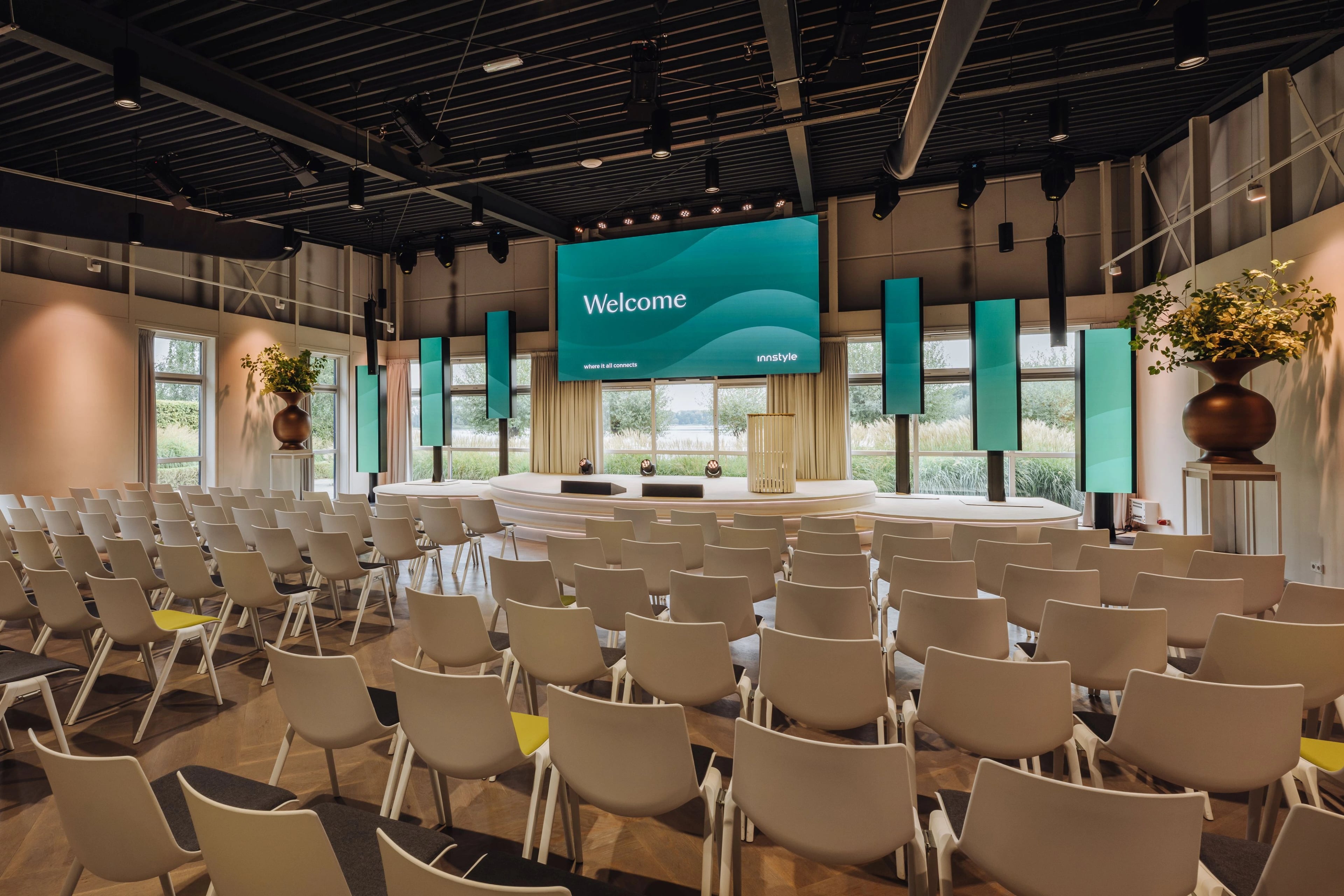
The space where your event takes place is not just a backdrop, but an active part of how energy levels rise and fall. Daylight, fresh air, comfortable chairs and a pleasant temperature sound like basic requirements, but event managers too often take them for granted. A stuffy room with no windows drains energy before the first speaker even steps onto the stage.
Also give careful thought to movement between spaces. Sitting in the same room all day is mentally draining, even when the content changes. Make active use of the venue: switch rooms, make use of outdoor areas and build physical variety into the day. Smaller rooms and breakout sessions can help, but only if they serve a purpose within the programme. Don't use them simply to get people moving; use them when the message calls for smaller groups, greater depth or discussions that don't work in a plenary setting.

(Re)creative programme elements that really work for larger groups
With larger groups, it's tempting to stick entirely to plenary sessions - after all, you have little choice when you have 200 people in one room. But even then, there are plenty of ways to boost energy and engagement. Think of folding paper planes with ideas that emerge: it sounds simple, but it creates a light-hearted break and encourages active participation at the same time. Or use red and green cards for quick votes, allowing participants to share their views in a single gesture. Even a brief 1-to-1 exchange with the person next to them about a statement takes hardly any time and does a great deal to boost engagement.
An activity on arrival or at the end of the day that brings people together is not just enjoyable, but strategic too. If people have already done something together when they arrive, it's much easier for them to join someone at a table over lunch. Energy and connection reinforce each other, and as an event manager, you can deliberately harness that dynamic.
Energy at an event is not a happy accident, but something you design
By understanding the energy curve, deliberately varying your programme and tailoring the information and (re)creative activities to your audience, you keep your participants engaged from start to finish. And engaged participants remember more, get more involved and leave feeling better.
Because this is exactly what goes wrong when you don't take a deliberate approach: the programme loses momentum, participants switch off and the message you prepared so carefully fails to land. You know that feeling, and it's precisely the feeling you can avoid with the insights from this article.
With 30 years of experience in business events, we at InnStyle know better than anyone how to manage energy - from the structure of the programme to the final activity of the day. Whether you're planning a conference for 300 people or an intimate team day for 20 colleagues, we'd love to help you explore your options. Request a proposal at or arrange a venue visit. From the first idea to the last drink, we help you keep energy levels high at your next event.
where it all connects