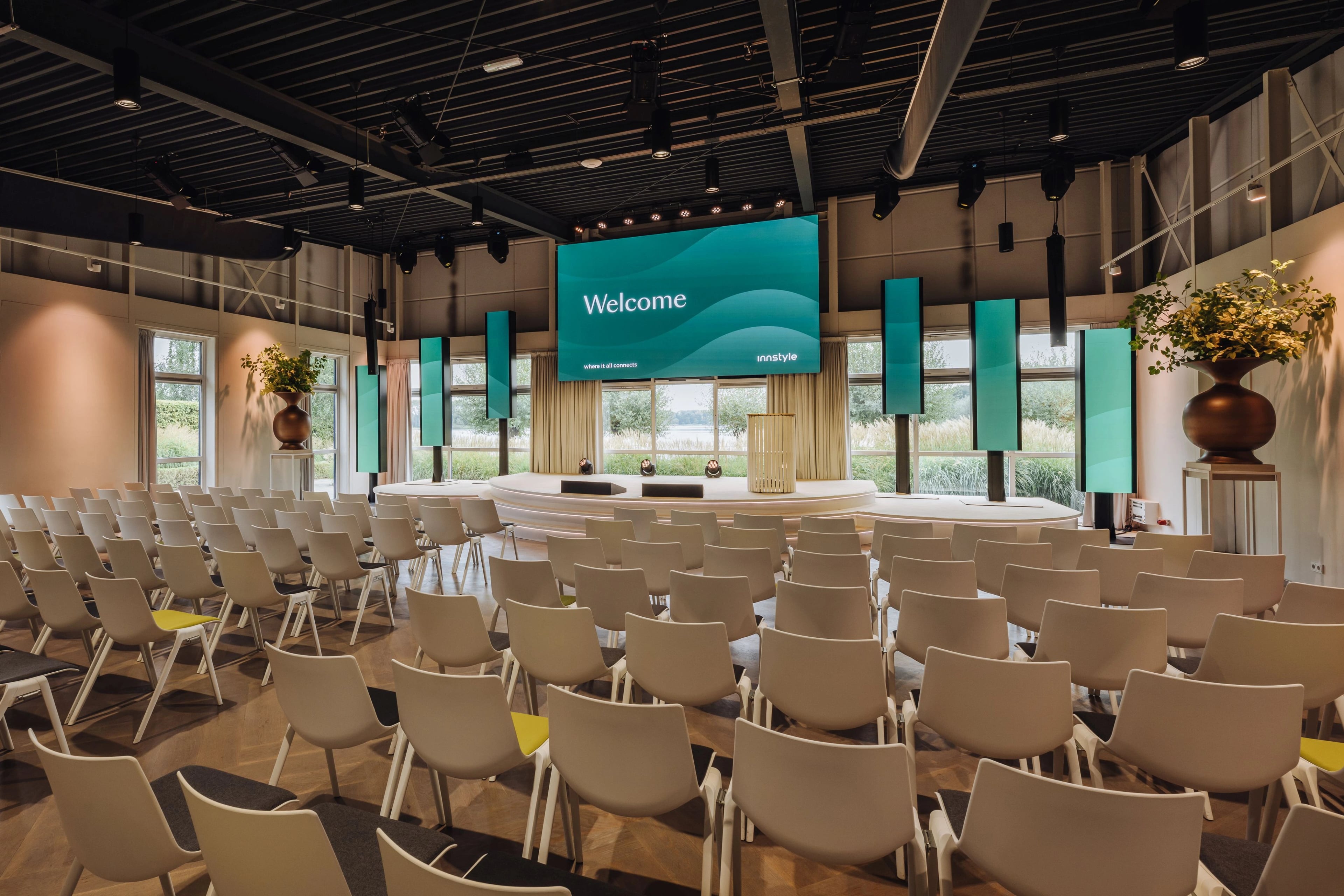
Organising an event in autumn: the practical checklist for busy event managers
Autumn is just around the corner and your diary is already full. Speakers changing their requirements at the last minute, registrations that just aren’t coming in and a programme that keeps shifting slightly. You simply want to put on a great event, but somewhere along the way you lose track of things. And that feeling of being busy but not sure whether you’re doing the right things is exactly what drains the most energy.
I see this with almost every event manager we speak to in autumn. As an event producer at InnStyle, I support dozens of clients each year and make sure they can focus on what really matters: the content and the message of the day.
In this article, I share my approach, including a practical checklist you can use straight away, so your next event will be a solid success. We’ll focus specifically on an event that businesses often organise in autumn: a knowledge-sharing day.
What is a knowledge-sharing day, and why is it more than a meeting?
A knowledge-sharing day is a business event focused on sharing knowledge. Think of a day with several speakers, breakout sessions, workshops or presentations around a particular theme. The aim is for guests to learn something, take something away or start looking at a topic differently.
It sounds straightforward, but in practice, organising a knowledge-sharing day is a major undertaking. Especially in autumn, when everything seems to need doing at once.
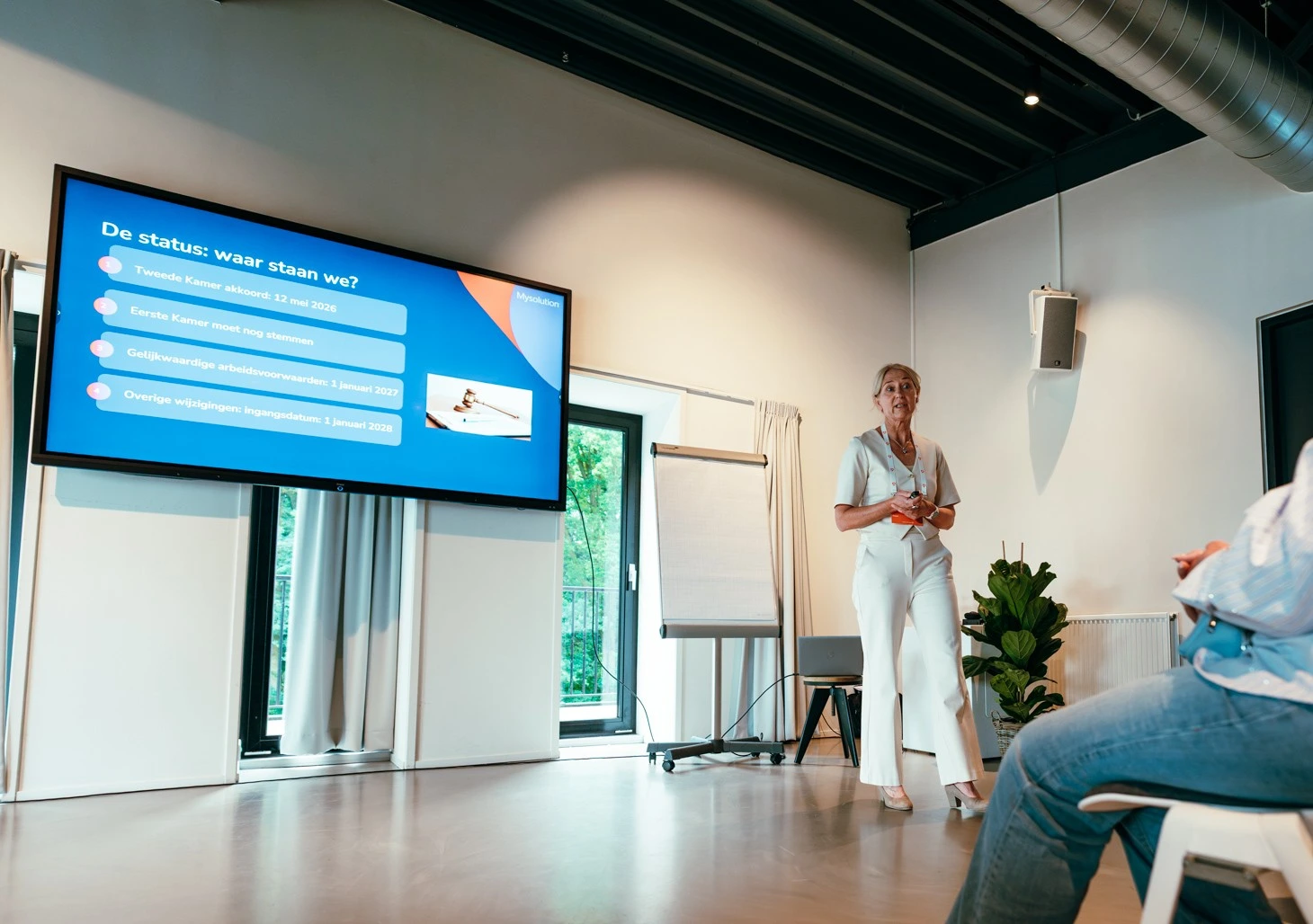
Organising an event in autumn: why the pressure is particularly high
For many organisations, September, October and November are the ideal time to schedule events such as knowledge-sharing days. Summer is over, everyone is refreshed and Q4 needs to start with renewed energy. That sounds good, but it also means that, as an event manager, you’re right in the middle of the busiest period of the year, while the rest of the organisation is also going full steam ahead.
Because it’s not just your diary that’s full. Sales teams need to hit their targets, management wants to see results and the event simply has to go well. The pressure comes from several directions at once, and the practical details of organising the event must not get in the way of your objective.
What exactly makes autumn particularly challenging? Registrations are slow to come in because guests have just returned from holiday and their diaries are already full. Last-minute changes are a daily occurrence, with speakers changing their requirements or a programme shifting at the last moment. And because you’re not the only person organising an event in autumn, venues, caterers and technical teams get fully booked sooner than you think.
With the right approach and preparation, you can get ahead of all these challenges.
Organising an event: the 5 building blocks for a successful day
Step 1: define your objective and target audience before booking anything
This is always step one, however busy you are. You need to be clear about what you want to achieve and who your target audience is, because these can vary more than many event managers initially expect.
Ask yourself: why am I organising this event? What should a guest have learnt, felt or decided by the end of this (learning) day? And who exactly are these guests? Are they your own employees or external clients? The latter calls for more effort to secure registrations and a stronger message in the invitation. The more clearly you define this in advance, the easier all the other decisions become.
''If you skip defining the objective or keep it vague, you will notice it later in the process: in a programme that goes off in all directions, speakers who are not a good fit and guests who lose interest.''
Step 2: confirm your venue and date as soon as possible
Once the objective is clear, the venue comes next. In autumn, this is more urgent than you might think, as popular venues get booked up quickly. When choosing a venue, look beyond capacity and price. Consider parking, public transport links, flexibility if things change and the atmosphere of the space. The surroundings contribute to the experience, and the experience determines whether your message sticks. A guest who arrives in the dark to find an overcrowded car park and has to queue at registration is already starting the day on the back foot.
.webp)
Part 3: finalise the programme and speakers at least 8 working days in advance
An event stands or falls on its programme. I regularly see things go wrong: speakers sometimes have specific requests that do not fit within the programme, and then suddenly want to rearrange the entire schedule at the last minute. Not every change can simply be made at short notice, as suppliers are already scheduled and the technical setup is ready.
My advice: finalise the programme at least 8 working days before the event. Give speakers clear instructions on timings too, and stick to them strictly, as you want to avoid overrunning. If one session overruns, the rest of the day shifts with it, and you can feel the impact on the energy in the room.
Part 4: make sure your invitations are compelling
The number of registrations is what causes the most stress, especially with external guests. Guests register very late or do not respond to an invitation at all, which means you need to keep actively following up with reminders. What works is making sure the invitation's message is strong enough.
''Do not just send people a venue and a time, but give them a reason to come: this is what you will learn, this is what you will take away, this is why it is worth your time on this busy Thursday in November.''
Especially if guests receive an invitation every quarter to a gathering on a similar theme, the programme needs to offer a distinct reason to attend.
Part 5: make the difference with strong logistics and follow-up
The day itself calls for well-organised logistics. Think smooth registration on arrival, a clear running order for the team on the floor and a warm welcome and support for speakers and crew. A queue at registration might be a sign that the event is popular, but it is also your guests’ first impression. You want to get that right. Don’t forget the follow-up either: a thank-you afterwards, a summary of the key insights or a brief feedback question shows that you take the day seriously, even after the last guest has gone home.
Last-minute changes: when do you adapt and when do you draw the line?
Last-minute changes always crop up, however well prepared you are. The trick is knowing when you can adapt and when you need to draw the line.
Small adjustments can almost always be accommodated. An extra microphone, a time change of a quarter of an hour, a glass of bubbly to round things off after all: these are things we can easily arrange. But completely changing parts of the programme two days beforehand is unfortunately no longer possible. Food has already been ordered, suppliers and staff have been scheduled, and the technical equipment is ready.
My rule of thumb: anything that affects staffing, food, technical equipment or the day’s schedule must be finalised no later than 8 working days before the event. Communicate this clearly to your client or internal stakeholders too, because the clearer the agreements, the fewer surprises there will be on the day.
.webp)
The practical checklist for organising an event
Drawing on our many years of experience in business events, I have put together the key points to check.
At least 8 weeks beforehand
4 to 6 weeks beforehand
1 to 2 weeks beforehand
8 working days beforehand: deadline for major changes
On the day
Organising an event without doing everything yourself: what can you outsource?
As an event manager, you cannot do everything yourself, especially during peak season. So the question is not whether to outsource, but what to outsource, and at what point the benefits outweigh the costs.
A rule of thumb I use: anything that takes you away from the content and message of the day is a task to delegate. Think registration on arrival, keeping the running order on track on the day, coordinating technical equipment and food, or decorating the space.
What you keep in your own hands is everything to do with the content: the programme, the speakers, the message you want to convey. That is where your expertise lies and where you make a difference.
An event coordinator from your venue, a host at registration or a trusted partner for branding and technical support will keep the day running smoothly, even when your attention is needed elsewhere.
''The earlier you decide who does what, the calmer the day itself will feel.''
From stress to focus: how to organise an event people will keep talking about
After reading this article, you will know what makes an event successful: start with a clear objective, finalise the programme in good time, stay on top of registrations and know when to be flexible and when to draw a line.
As an event manager, you feel the pressure to arrange everything yourself. That feeling is what takes the most energy. And that is precisely where the right support makes a difference.
At InnStyle, we have been organising business events for brands such as Rabobank, bol. and Nike for 30 years. Every day, I help clients ease that pressure so they can stand confidently in front of their audience on the day itself.
Would you like to talk through your event this autumn? Request a proposal or read our earlier article on choosing the right venue. The earlier you put the details on the table, the calmer the planning process will be and the more likely your guests are to leave with a feeling that stays with them long afterwards.

Amber
Event Producer
''From idea to experience: together, we create something special.'' My experience began on the floor at event venues and restaurants, and grew at a hospitality group in Amsterdam, where I organised both private and corporate events. At InnStyle, I draw on that background to take care of everything for clients, from the first conversation to the last guest. My favourite events are business gatherings where styling, entertainment and an unexpected concept come together to create an experience that stays with guests.