.png&w=3840&q=85)
"A good business event stays with you; a standalone message doesn't"
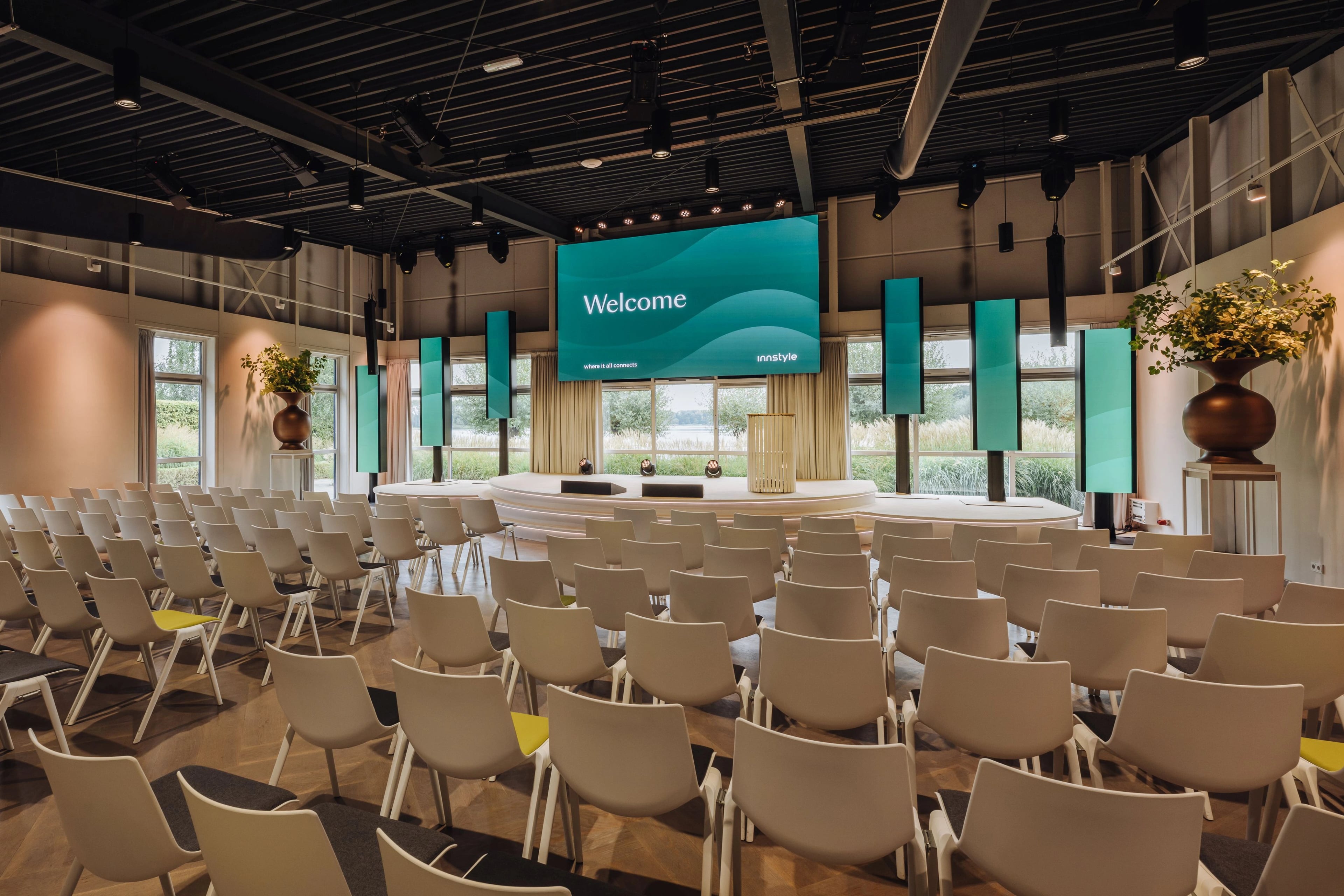
In InnSights, Richard de Jong (CEO of event venue InnStyle) shares his vision for business events. In this edition, we explore why satisfied guests are not the same as real impact, why the events industry consistently asks too little of itself, and what it takes to truly move people to act.
A good business event does more than feel good: it moves people to act. That is the conviction I bring to my work every day. But if you ask me how often the events industry delivers on that in practice, my answer is: nowhere near often enough. Because high ratings, full rooms and positive feedback say little about what has actually changed for the people who attended. We have become so used to events that touch people briefly but set nothing in motion that we have forgotten what they are meant to achieve. Feeling good is not the same as making an impact, and that distinction is exactly where things go wrong.
The business event you have forgotten by the time you reach the exit
I say it often, but it remains the most honest summary of what is wrong with the industry: you arrive at an event, you leave again, and before you have even left the car park, you have forgotten it. Not because it was bad, because the venue was disappointing or because the food was mediocre, but because nothing really stayed with you. No moment, no conversation, no memory that still comes back to you a week later.
That is the insidious danger of the satisfied guest. Everyone expects a business event to be good as a matter of course. You book a venue, make sure the coffee is ready and bring in a speaker who knows their subject. Then people give it a seven, meaning they are satisfied. But to me, satisfied is not a compliment: it is simply a sign that you have met the basic expectations, nothing more.
The same is true of service. A warm welcome, a team that thinks along with you, a day that runs smoothly: these are not minor details; they shape a large part of the experience. But here, too, satisfied is not enough. Good service exceeds expectations. Not just having the coffee ready, but someone remembering how you take it. Not just a tidy room, but something being arranged that you had not even thought of yourself. My colleague Tommie wrote an insightful piece about this.
"We do not want satisfied guests. We want fans."
The difference lies in what happens after the event. A satisfied guest goes home, eats, sleeps and gets back to work the next day. A fan is still telling a colleague about what they experienced three weeks later. It is not about the agenda or the presentation, but about the moment when something shifted for them. You need to choose this pivotal moment in advance, as the starting point for the whole day.
A quarterly meeting that stayed with no one: an honest anecdote
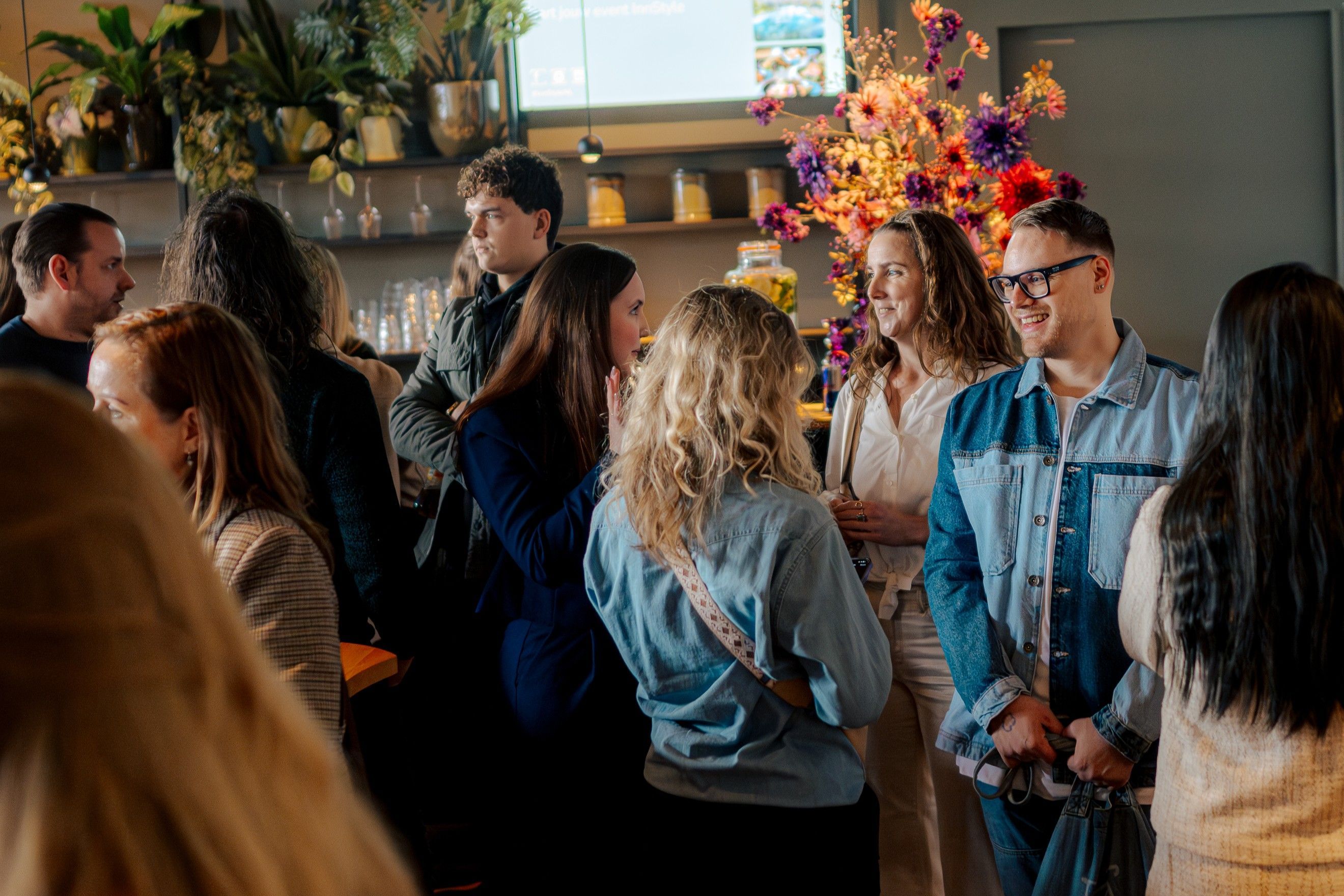
I look back on a time at an organisation with dozens of locations across the country, where I gave presentations at meetings for all the location managers. So I was right in the thick of it. Around a hundred people coming together two to three times a year. At a different venue each time, but always with the same format. A programme packed with information, updates and figures, all undoubtedly very relevant. But what actually happened? The managers left exactly as they had arrived. And honestly, this was no exception. I see it everywhere, at every organisation that builds a day like this around content.
The managers gained no fresh energy, they had not approached a single conversation differently, and they never stepped outside their daily routine. They listened, nodded, drank their coffee and drove home again. In fact, some left with less energy than they had started the day with. The complete opposite of what a gathering like this should achieve.
"The focus was on what the company wanted to communicate. Not on how they wanted participants to leave: with what behaviours, what energy."
Looking back now, the cause is clear. The event was built around the content, not the people. The question was: what do we need to get across? Not: what do they need to take away? And that is a fundamentally different starting point. The first question leads to an agenda, while the second leads to an experience. And only the second question leads to a moment people remember.
Only now do I know what was missing, and I would take a completely different approach: start with the outcome. How do we want these hundred people to still be talking about this two months from now? Then work backwards from there to the programme, movement, connection and moments of surprise. All with the aim of creating a lasting impact.
The underlying cause: most venues simply hire out a space
That meeting was no exception, but typical of how we often still view business events. There is an underlying reason for this: most venues and organisers simply answer the question they are explicitly asked. 'Do you have a space available on this date?' - 'Yes, here is the quote'.
Conference centres and hotels that hire out spaces are not event creators at the heart of their business model, but space providers. The meeting room is an additional revenue stream alongside hotel rooms and restaurant visits. The focus is not on the purpose of the meeting, but on the availability of the space. And that leads to what I see as the industry's most characteristic image: four walls, a screen, chairs. And the question of whether some sandwiches can be arranged.
"Most venues provide a space. We design an outcome."
At InnStyle, we think differently from the very first contact. Not: what do you need? But: what do you want to achieve? How do you want your guests and yourself to leave this event? With what behaviours, what change? That is the main mission. And everything - the programme, the setting, the activities, the catering, the flow of the day - serves that mission. That sounds logical, but in an industry used to responding to availability, it is a radically different way of working.
What does movement really mean?
A message sticks not because of what you say, but because of what happens around it. It starts with the setting: a place that gets people out of their usual mindset and makes them receptive. Only then can an unexpected moment arise that gets them moving. And that movement is what makes the message land. Not the slide, not the speech. The interplay.
"The setting makes people receptive, the right moment gets them moving, and only then does the message stick."
That is why, at InnStyle, we always look for elements in a day that go beyond expectations. Not because it is fun, but because that is simply how people work: we need stimulation to truly remember something. And a moment like that does not happen by itself. It has to be designed. Never by chance, always with a purpose.
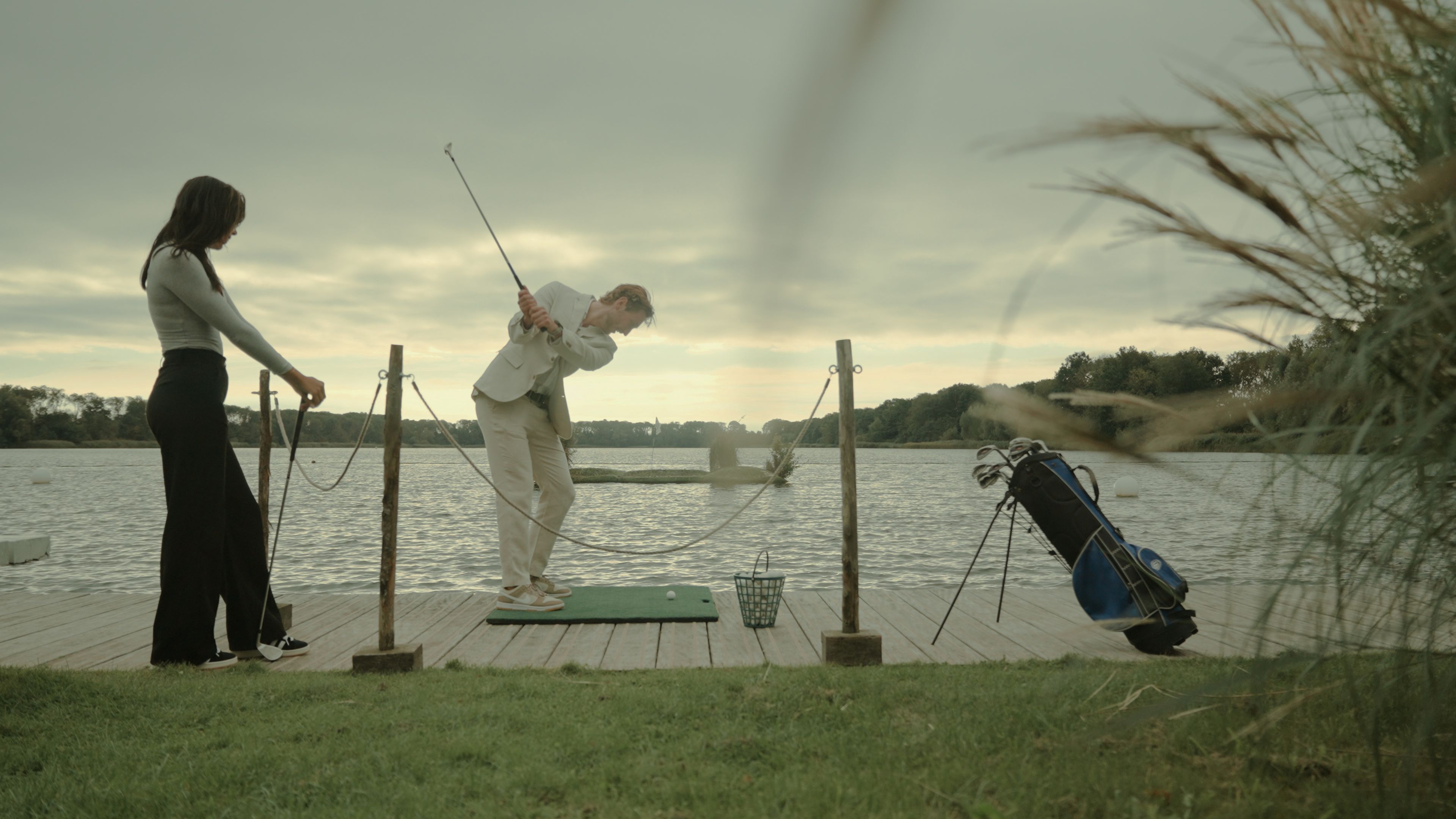
No one remembers the third slide of a PowerPoint presentation, and no one quotes the director's annual speech weeks later, but everyone remembers how it felt to swing at a golf ball for the first time and miss it by three metres while three colleagues cheered them on. Or the conversation that started during a game of table tennis with someone from another department you would normally never speak to. Those are the moments that stay with you. And without a moment like that, your message does not land.
"When a client calls a few days later, we hear: they're still talking about it. That is the goal."
For me, movement is not just one thing. It can be physical: getting someone to do something they have not done for years, taking them outside their everyday comfort zone, making them laugh at something they would normally never do. But it can also be mental: an insight someone takes away, a shift in perspective, a belief that changes after a good conversation. Or social: a new connection, a relationship that has deepened because two people stood next to each other rather than in front of a screen.
All these forms of movement have one thing in common: you have to build them in deliberately. Not over-organised or forced, but as moments in the day when something unexpected happens that briefly takes people out of their routine.
A tailored activity programme: out of your comfort zone, without discomfort
Not every group responds to physical activity in the same way. And that is exactly why we always start with the question: who are we doing this for? Because an activity that is a fun addition for one group can feel like a poor choice for another.
Take a drinks reception with a table tennis table. It might sound simple, but playing together naturally creates interaction. People stand side by side, cheer each other on and laugh. And that laughter - whether it is about winning or being clumsy - is exactly the connection you want. It is not about someone hitting the perfect shot; it is about the three people standing around them, sharing that moment.
"Stepping outside your comfort zone gives you moments you remember.''
The same goes for a golf activity on the water, a magician mingling at a networking reception and briefly bringing small groups together, or an escape room at the end of a day packed with information. You do not need to see these as gimmicks. Instead, think of them as deliberately designed moments built into the programme to help people stop operating on autopilot and be truly present.
But that only works if it suits the group and the message of the day. Especially when the message is difficult (think poor annual results or a restructuring), you want people to leave feeling energised, not weighed down. So how do you still get people moving and connecting? We ask ourselves that question afresh for every business event. There is no standard answer, only a tailored approach.
A business event with impact starts before you reach the car park
There is another prerequisite for impact that is consistently underestimated in the industry: communication in the run-up to the event. We saw this again recently. A client invited five hundred people to an event with a well-planned programme, a logical flow and an engaging experience. Three hundred of them registered. And on the day itself, two hundred were in the room. So sixty per cent of the five hundred invitees were absent. And even among those who had said yes, one in three ultimately failed to turn up.
"If you only have two hundred of the five hundred invitees at your venue, you have not made an impact. No matter how good the event was."
And this is not a hypothetical situation: it happens far more often than the industry is willing to admit. The invitation is sent by email, one reminder follows, and then the organisers simply hope that enough people will register. Meanwhile, the organiser is too busy to properly keep track of who is coming, who has cancelled and who has not yet responded. It is treated as an afterthought, when it is actually central to everything. Because impact does not start at the welcome. Impact starts the moment someone decides to come, or not.
If we’re involved from the outset in organising a first-class event, we want to help shape that process too. What went wrong at previous events? How many people were invited, how many registered, how many attended? Those answers allow you to help shape the registration process, the communication and the sense of urgency you create in the run-up. So that on the day itself, the space is full and the impact you’ve designed really does hit home.
"It starts even before the enquiry. And we want people to still have that memory as they drive out of the car park, not to have forgotten it before they’ve even left."
Business events really can be better: seven out of ten isn’t enough
What I’m describing isn’t a completely new vision, but a different way of looking at what an event is. Not a date in the diary, but a means to an end. Not a facility, but an experience. Not filling a day with content, but designing a day around the guest who will leave here feeling inspired.
The bar in the events industry is pretty high. Yet at many venues, things still stop at the basics. Not because people don’t want to do better, but because the question being asked is too narrow. We check availability, prepare a quote and deliver the event. Our guests give us seven out of ten, we’re satisfied and we move on to the next meeting. That chain needs to be broken. By getting involved earlier in the process, contributing more deeply and focusing more firmly on the only thing that really matters: what remains when the day is over?
A message doesn’t stick by itself. The surroundings open people up, the moment moves them, and only then does what you wanted to say hit home. And that one moment when someone stepped outside their comfort zone, laughed at something unexpected or had a conversation that would otherwise never have happened — that’s what we create. Not as a by-product of a well-organised day, but as a goal in its own right.
Movement, connection and experience are not separate elements. They only reinforce one another when they’re designed together.
where it all connects
"We don’t want satisfied guests. We want fans."