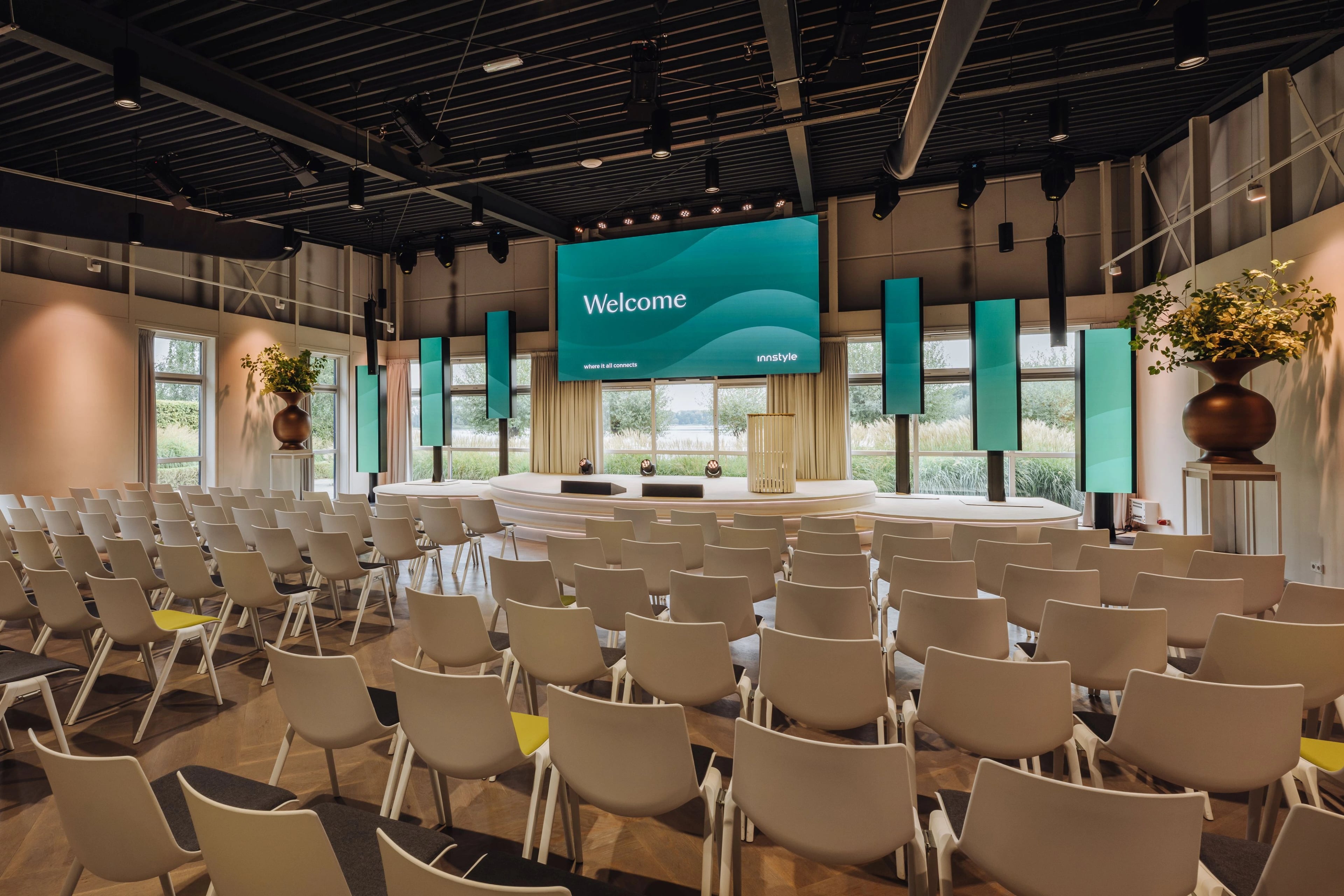
Organising a networking reception: how to get guests really talking to each other
You're organising a conference, seminar or staff day, and a networking drinks reception is scheduled for the end of the programme. On paper, it looks good: a friendly atmosphere, a few poseur tables, and good food and drink. But you've seen it before: guests immediately seek out the colleagues they already know, and by the time every participant has a drink, everyone is back in the same group they were in at lunch. It was labelled ''networking'', but in reality it simply meant everyone had another soft drink before heading to their cars, without any truly interesting conversations taking place. How do you make sure this part of the programme actually achieves what it's meant to, without leaving it to chance?
I work as an event producer at InnStyle and regularly help run conferences, seminars and staff days where a networking drinks reception is a regular part of the programme. What strikes me is this: it seems like the easiest part of the day, but it's often the part that gets the least thought. A space and drinks are arranged, and the rest is left to take care of itself. Yet this very element, with a little guidance, makes the difference between guests who say afterwards, ''I met some really interesting and lovely people'', and guests who only spoke to colleagues they already knew.
In this article, I'll walk you through how to structure a networking drinks reception, which tips really make a difference, which energisers work and which don't, and whether indoors or outdoors works for you, depending on the weather.
Organising a networking drinks reception: how do you stop it becoming a box-ticking exercise?
A networking drinks reception that goes well on its own, without any guidance, doesn't really exist. If you simply set out poseur tables, give everyone a drink and hope for the best, exactly what you're trying to prevent will happen: people seek out safe, familiar faces. That's not because attendees are unwilling, but because it's hard to step away from that sense of comfort.
''People rarely break that pattern on their own. You need to give them that little nudge.''
I also often see organisers matching guests before the event, for example through an app that suggests who would be a good match, but then doing nothing further with it on the day itself. That's a waste of the work already put in beforehand. A networking session that works therefore needs that little bit of extra guidance throughout the different parts of your event.
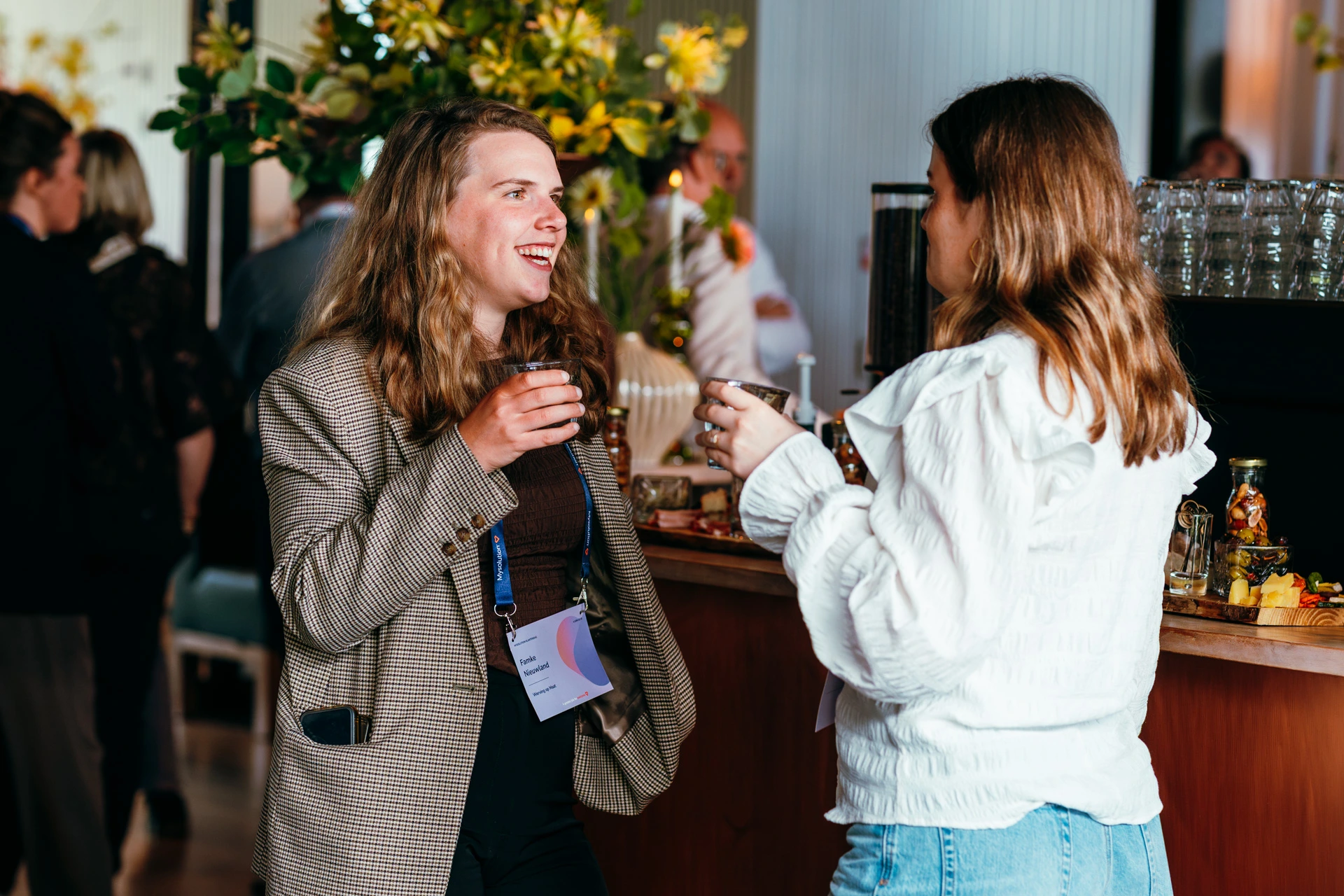
The 4 steps that always come up when planning a networking session
- Step 1: start by managing expectations - communicate clearly in advance who will be attending and what the purpose of the networking is, so guests know what to expect. Where possible, use name badges that include company names and job titles, so everyone can see at a glance who they're speaking to.
- Step 2: let networking begin earlier in the day - are you including breakout sessions in the programme? Get people talking to each other there. That way, the drinks reception is not the only opportunity for people to connect, and it becomes much easier to continue the conversation afterwards.
- Step 3: choose your timing carefully - do not schedule networking right at the start of the day or only at the end, but immediately after a plenary session and breakout sessions. This gives guests something in common to talk about straight away, rather than having to start a conversation themselves when they arrive. At the same time, if you only let guests network at the end of the day, you risk them heading straight for the car park. Ideally, build networking into your programme in the middle of the day.
- Step 4: think about the layout from the outset - we already take networking into account when planning the room layout: we put out standing tables and never place a chair at the head of the lower tables. That way, there is always room to join a conversation, rather than a table looking full straight away.
Do you not yet have a clear plan for your networking session? That need not be a problem: from our very first conversation, I will help you think through the layout, activities and timing, even if you do not yet know exactly what you want.
Which 5 InnStyle tips get guests really talking to each other?
- Tip 1: use a conversation starter rather than trusting that things will work out on their own - cards with conversation topics or questions on the table, or a game that gets people talking, encourage attendees to approach someone they do not yet know. Awkward? Not if you organise it well.
- Tip 2: use the same space for every food and drink break - coffee, lunch and the drinks reception all take place in the same hospitality area, such as the Leisure Café. As guests pass through several times a day, they find themselves among different people each time. This creates new groups throughout the day, rather than giving you just one opportunity to bring people together.
- Tip 3: keep the drinks reception short and focused - if you do schedule the drinks reception at the end of your programme, remember: people want to get home sooner these days than they did a few years ago, so do not let a networking drinks reception drift on endlessly without a clear focus. Focus on quality rather than length: think of a special non-alcoholic cocktail and entertainment, or a game or party element that guests will stay for.
- Tip 4: make sure no one leaves on an empty stomach - precisely because guests are keen to leave sooner, there is a risk they will skip the food, even though you have catered for everyone. So have the drinks & bites ready as they leave the final room, so they can have something to eat before heading for the door. That way, your guests leave feeling satisfied and energised, knowing they have been well looked after during your event.
- Tip 5: sometimes people need to get moving to start talking to each other – standing still with a drink in hand does not automatically lead to a good conversation. Instead, add an activity that gets your guests moving, such as hitting golf balls or trying archery from the terrace. A shared activity gives people a reason to stand alongside each other and makes it easier to talk to a stranger. And it does not have to be expensive: for around €475 per hour, you can get your guests actively involved.
.webp)
Which energisers and activities work indoors, and which work outdoors?
Indoors there are plenty of options for mixing up a group. With an activity like Play it Nice, Break the Ice , everyone scans a QR code, is assigned a colour and a group, and gets started with conversation prompts, statements to discuss and a puzzle already set up in the app. After the first round, new groups are formed so that each guest meets as many people as possible. An interactive game like a Kamelenrace, where groups answer questions together, also creates energy and gives people a shared talking point afterwards. And in a Wol-act , the speaker tells a story and throws balls of wool around the room to literally connect people – a kind of Cupid for your event guests!
Outdoors , anything that gets people moving together works particularly well: hitting golf balls or trying archery on the terrace are relatively affordable additions that encourage guests to stay longer at the event and give them a reason to start talking to each other.
Not every activity is suitable for networking. Something like a racing simulator is great fun in itself, but you do it on your own. So it does not contribute to networking. The same applies to assigning fixed seats at a long table: you rarely get beyond talking to the five people around you.
What are plan A and plan B if the weather does not cooperate?
At InnStyle, the hospitality area (Leisure Café, Foyer 1.0, Hout and Foyer 2.0) always combines indoor and outdoor space. The bar is always indoors, but in good weather we open the sliding doors fully, allowing the indoor and outdoor spaces to flow into each other under the canopy or onto the open terrace. So it is rarely a clear-cut choice between ''we'll do it outdoors'' and ''we'll do it indoors''. The weather mainly determines how much of the outdoor space you can actually use.
If you want to extend further outdoors rather than stay under the canopy, tents can make that possible in bad weather, but that is something we agree on together in advance. For most networking sessions, the usual combination of a hospitality space with an adjoining terrace is sufficient, so you do not need a complete alternative plan ready for every weather forecast.
Which space works best depends mainly on the number of guests and whether dinner is on the programme. For larger groups, from 170 people, a space such as our large Foyer in Locatie 1.0 is a better fit; for smaller groups, you are more likely to choose a more compact space in Locatie 2.0.
Ready to create your networking drinks event?
A networking drinks event that really works does not happen by chance. It comes down to a few deliberate choices: managing expectations well beforehand, a layout that encourages conversations, an activity that brings people together rather than keeping them apart, and a networking session that is short and interesting enough to keep people engaged. That is the difference between guests who say afterwards that they have made new contacts and guests who have only spoken to colleagues they already knew.
At InnStyle, I help you think this through from our very first conversation. Not just the space, but also the layout, the activities and a suitable plan for the weather. Curious about how we can help you at InnStyle? Read when a genuinely hassle-free service is worth the investment, or take a look at our tips for keeping an event energised.
Would you like to explore which networking format would work best for your event? Request a no-obligation proposal, or contact me to discuss all the possibilities.
Photos: Mysolution and Fitchd

Amber
Event Producer
"From idea to experience: together, we make it something special." My experience began on the floor at event venues and restaurants, and grew at a hospitality group in Amsterdam, where I organised both private and corporate events. At InnStyle, I draw on that background to take care of everything for clients, from the first conversation to the last guest. My favourite events are business gatherings where styling, entertainment and an unexpected concept come together to create an experience that stays with guests.