Organising a business event: is an in-house venue really better value?
In short
- Organising an event in-house saves on venue hire and travel time, but hidden costs and staff time can reduce the financial advantage.
- The costs of extra security, cleaning, furniture and technical facilities are underestimated for in-house events.
- A full-service external venue costs roughly €150–€200 per person and offers hassle-free organisation, atmosphere and predictable costs.
- An in-house venue suits small-scale, informative meetings where existing spaces and facilities meet your needs.
- An external venue suits events designed to make an impression, reinforce a message or bring teams and business contacts together.
When organising a business event, you soon face a fundamental choice: do you host it in-house, or choose an external venue? Your manager or budget holder will often automatically assume that organising it in-house is the cheapest option. On paper, that is true: no venue hire, no travel costs, and everyone knows the way to the meeting room, canteen or atrium. But perhaps you have not organised many business events yet, and you are wondering whether you have a clear picture of all the costs and work involved when the time comes to justify your budget.
Perhaps you have already drawn up a budget for an in-house event, but you are not yet sure whether you have accounted for every cost, or whether substantial expenses might crop up at the last minute. At InnStyle, we have been organising business events for companies such as Rabobank, bol. and Nike for 30 years, and in my conversations with event organisers, I regularly see what gets overlooked when weighing up in-house and external options.
In this article, I compare the advantages and disadvantages of both options, calculate the hidden costs of an in-house event for you, and help you determine when organising it in-house really is cheaper and when the difference is smaller than it looks on paper.
Will you need to make a convincing case for your venue choice to your budget holder? Read also: how to pitch your venue choice to your management team.
Organising a business event: in-house or at an external venue, what is the difference?
What is an in-house event?
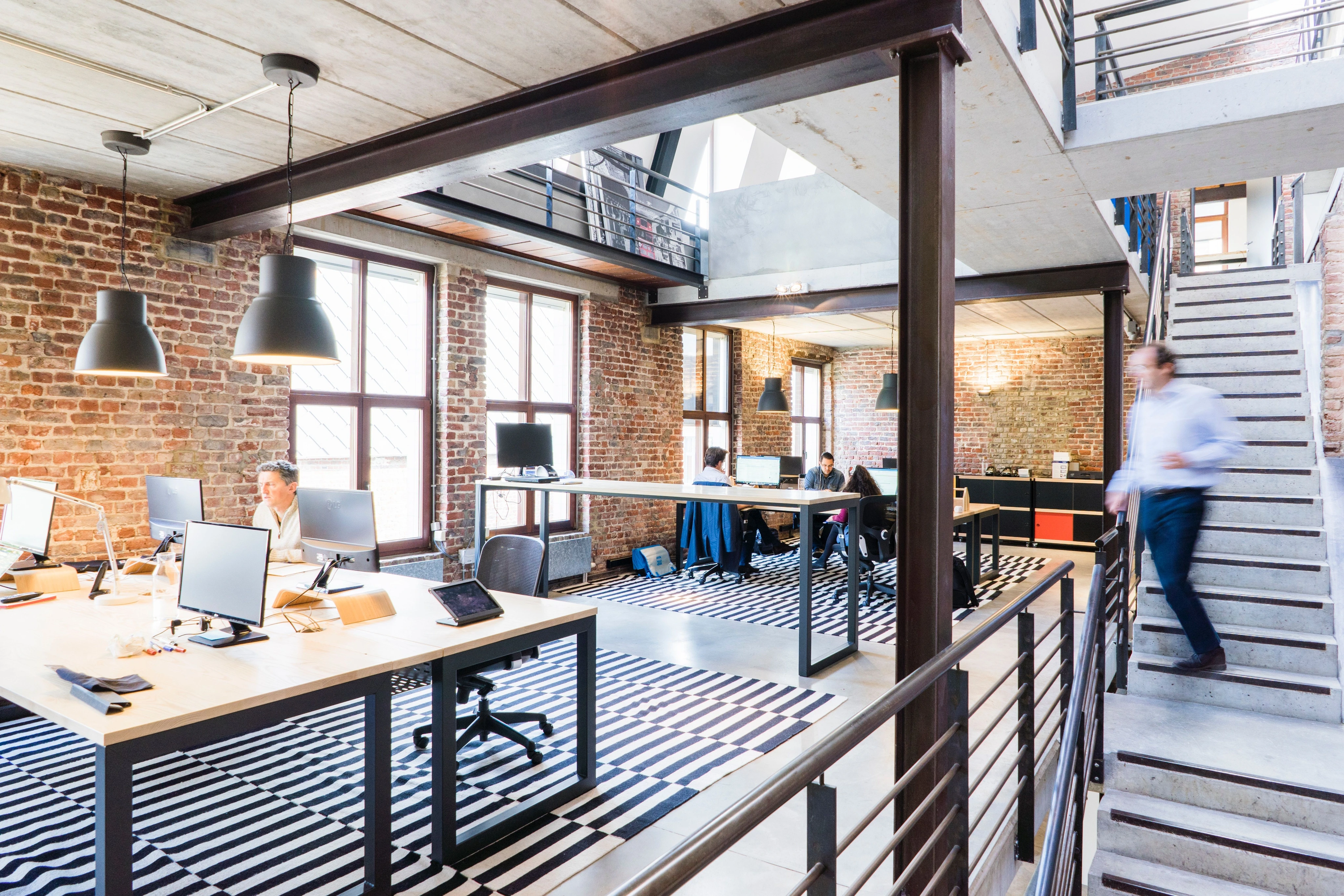
An in-house event takes place in your own office, business premises or another venue that your company already owns or can use free of charge. You use the existing meeting rooms, staff restaurant or an empty hall, and arrange everything else you need yourself, or with your own facilities team: from furniture to catering and technical equipment.
What is an event at an external venue?
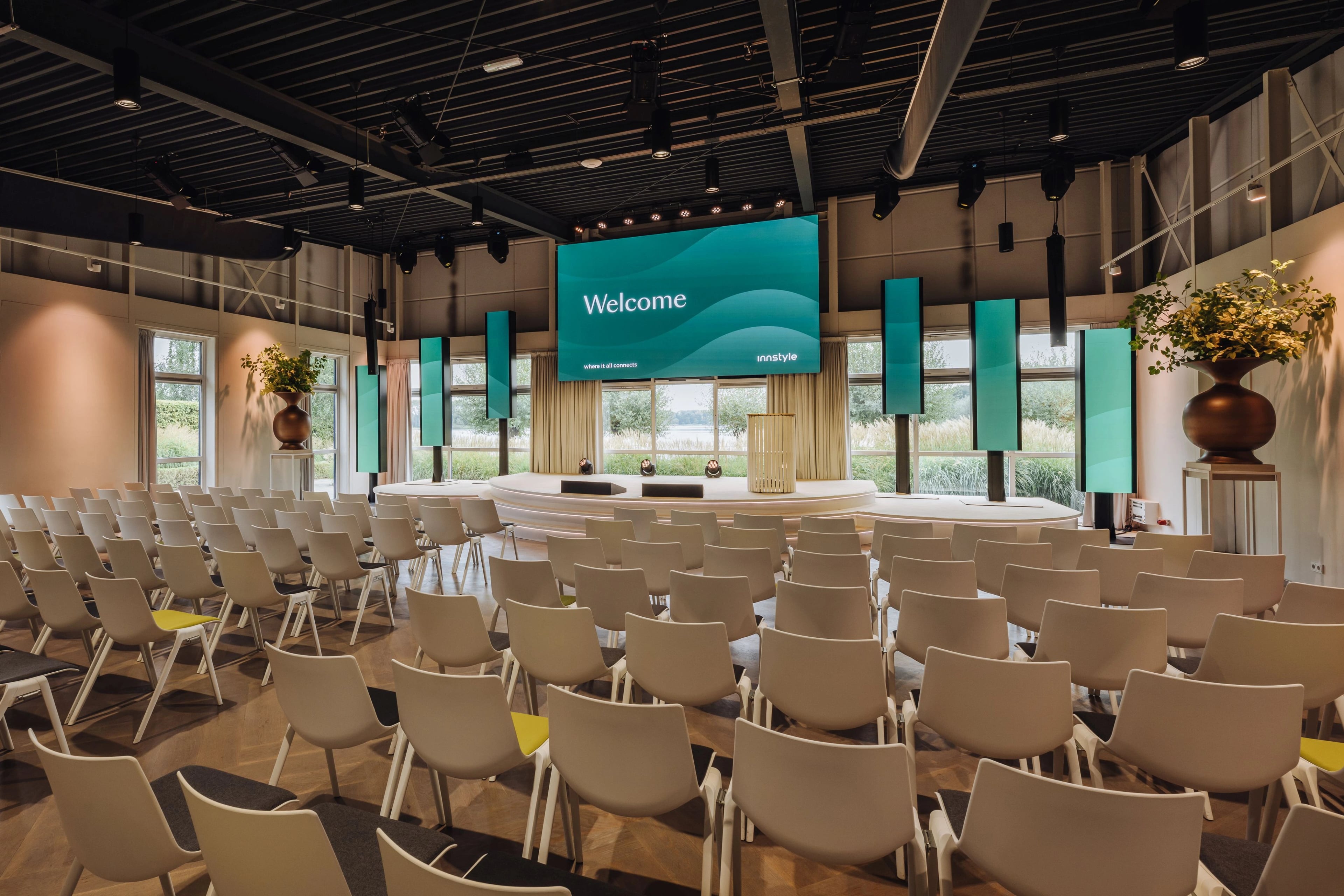
With an external venue, you hire a space from an event venue or hospitality provider that specialises in events, including business events. You pay for the space and, depending on the type of venue, this comes with support, technical equipment, catering and sometimes a team that takes care of everything, from the initial planning to coordination on the day itself.
Advantages of an in-house event
Advantage 1: no venue hire
With an in-house event, you do not pay to hire an external space. This immediately removes a significant expense from your budget, especially for an event with lots of guests, where hiring an external venue can quickly become one of the biggest costs because so many spaces are needed.
Advantage 2: no travel costs and less time lost
Colleagues do not need to travel. This saves on travel costs, and everyone can be there sooner, so less productive time is lost while people arrive. For a half-day event, this can make the difference between an afternoon programme starting at one o'clock or not until two o'clock because everyone needs to travel and park first.
Advantage 3: familiar surroundings for employees
Your own office is familiar territory. For some types of events, such as an informative staff meeting or a quarterly update, that is reassuring: people feel at ease straight away, do not need to adjust to a new environment and can simply return to their desks afterwards to carry on working.
Advantage 4: more flexibility in scheduling
Because you do not need to book an external provider, you can often change the date more quickly if the schedules of key speakers or decision-makers change. You are not tied to a venue's availability or to the cancellation terms that often apply at external venues.

Disadvantages of an in-house event
Disadvantage 1: hidden costs that throw your budget off
The costs you save on paper crop up again in other ways. If you have more visitors than your usual daily occupancy, you will often need extra security, simply because there are more people in the building than it is normally set up to accommodate. You also need to move furniture to make room for the programme, arrange a thorough clean afterwards that goes beyond everyday office cleaning, and often hire extra items that you do not have in sufficient quantities: glasses, plates, cutlery, chairs or poseur tables for the number of guests you expect.
All these items appear separately on individual invoices from different suppliers, making it easy to overlook them as a whole and underestimate the total cost.
We saw this, for example, with a client who was organising a large Christmas event. A few days beforehand, far more registrations came in than expected, making the indoor spaces too small. As it was winter, the event had to move outdoors. Hiring a marquee was quickly arranged, but it was not in the original budget. Additional bars and heaters to warm the marquee were needed too. Together, these added around four thousand euros in extra costs, purely because the group turned out to be just a little larger than planned.
Disadvantage 2: power and technical demands that your existing facilities cannot handle
Your office is set up for a normal working day, not for an event with a caterer connecting kitchen equipment and a technical team providing sound, lighting and screens. If your power supply is not designed to cope with that, you risk a power failure during your programme, or may end up having to arrange a generator, extra cabling or an electrician to check the distribution board. This is a cost and a risk that is easy to overlook beforehand, because you never encounter this level of demand or overload in the day-to-day use of your office.
''A common misjudgement: hiring a few food trucks for the catering seems like a simple solution, but they too need a water supply and their own power connection. Something you are rarely set up to provide as standard for an in-house event.''
Disadvantage 3: you need plenty of your own colleagues, both before and during the event
You cannot organise an in-house event on your own. During the planning stage, you need colleagues to help decide on the layout, order supplies and liaise with suppliers. On the day itself, you need people to move furniture, welcome guests, step in if something goes wrong and tidy up afterwards. Those hours are not usually a separate item in your budget, but they certainly take up your organisation's capacity: colleagues cannot get on with their own work that day, and often in the days leading up to it either, because preparations take time on top of their regular duties.
As a rough rule of thumb, allow around 40 hours of preparation time, shared between 3 colleagues. On the event day itself, you can easily need 10 colleagues to keep everything running smoothly: welcoming guests, checking in suppliers, handing out registration badges and greeting speakers. Most in-house budgets do not account for those hours, even though they use up capacity your organisation needs elsewhere.
Want to know how event coordination works at InnStyle? Read also: event coordination in action.
Disadvantage 4: there is no element of surprise or professional look and feel
An invitation to an event at an external venue can feel like a day out for guests, even before the programme begins. With an in-house event, you miss out on that effect: guests walk down the same corridor they see every working day, making it harder to create an atmosphere that feels different from an ordinary day of meetings right from the start. For events where you really want a message to stick, such as a strategy day or a product launch, that familiar setting tends to work against you rather than for you.
Advantages of an external venue
Advantage 1: everything is taken care of
At a full-service event venue, you do not have to arrange the catering, technical equipment, furniture or coordination on the day yourself. That work is handled by the venue's team: they make sure the spaces are ready on time, the equipment works, food and drinks arrive at the right moment and someone is there to make adjustments if the programme overruns. This lets you focus on the content of your event, rather than spending the whole day walking around with a two-way radio to solve logistical problems.
Curious about exactly what a full-service event venue takes care of, and what it costs? Read also: full-service event venue: what is included and what it costs.
Advantage 2: an atmosphere and experience that support your message
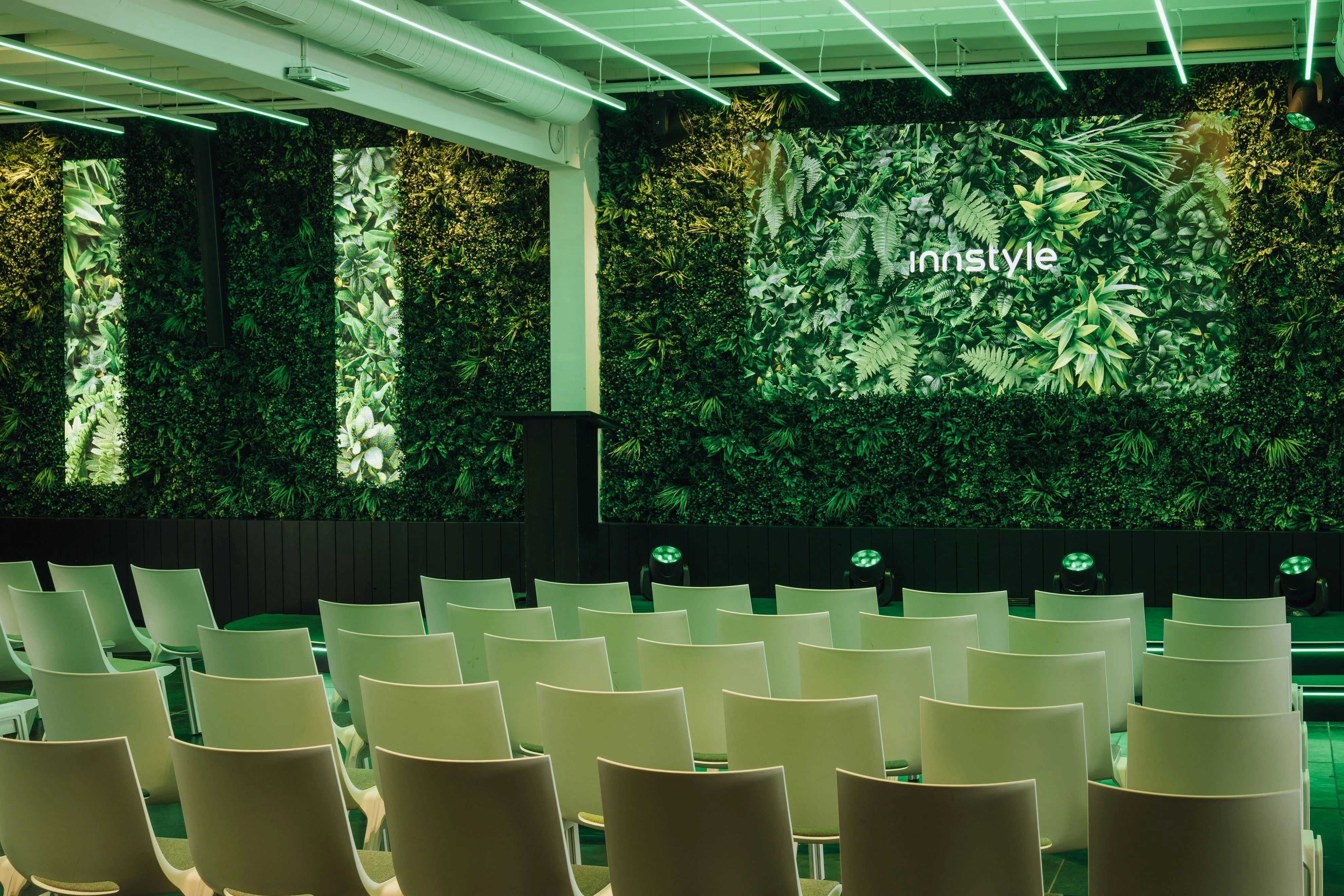
An external venue is specifically designed to make an impression. The space, the décor and the experience all contribute to what you want your event to achieve, whether that means making your message more memorable or giving guests the feeling that they are experiencing something special. A different setting also helps people mentally step out of work mode, which in turn encourages them to take a more active part in the programme.
We saw this recently with a company that unveiled its new visual identity at InnStyle following a period of restructuring and significant internal changes. Together with the client, we chose a low-key event with a welcoming atmosphere that suited the occasion. For employees, it genuinely felt like an afternoon out, exactly what they needed at that moment to celebrate the new direction together.
Benefit 3: predictable costs
A clear quote tells you upfront what you will pay. There are no surprises afterwards for extra security, cleaning or hired furniture, because these are already included in the agreed price. This also makes it easier to justify your budget to your budget holder from the outset, rather than having to explain additional invoices afterwards.
Disadvantages of an external venue
Disadvantage 1: higher direct costs
You pay for venue hire and often also for services that you would arrange yourself, or with your own staff, for an in-house event. The direct amount on the quote is higher than the costs you see on paper for an in-house event, and that difference is usually what the discussion with your budget holder centres on. At a full-service event venue, you can expect to pay roughly 150 to 200 euros per person, depending on the programme, food and drink, activities and technical equipment you need. Compare that amount with what you would spend on the items above for an in-house event, and the comparison becomes much more concrete.
Disadvantage 2: travel time for guests
Depending on the venue, guests will need to travel, which takes extra time and sometimes involves additional costs, particularly if some of your guests rely on public transport or the venue is outside the city. A good event venue will help you find solutions, for example by providing a shuttle bus or clear travel information, but it remains a factor you do not have to deal with at an in-house event.
Photo: MySolution
When is an in-house event the right choice?
An in-house event works well for small, informative gatherings where the content matters more than the experience: a brief staff update, an internal training session, or a meeting where your main aim is to get together efficiently. Particularly if you are only hosting a small number of colleagues and your existing space, furniture and technical facilities are sufficient without any adjustments, holding the event in-house is often the quickest and most obvious choice. The same applies if time is short and you do not have time to book an external venue and set it up to suit your needs.
When is an external venue the right choice?
When your event is intended to make an impression, reinforce your message or genuinely bring your team or business contacts closer together, the investment in an external venue is often worth the cost. This is especially true if you find that the hidden costs and staffing needed for an in-house event come close to the cost of an external venue, because for roughly the same amount you also get peace of mind, atmosphere and professionalism. For events with more than a handful of guests, where your power supply, technical capacity or space is stretched to its limits, an external venue is often the more practical choice.
How to check your budget before making a choice
If you need to justify why you are or are not choosing an external venue for your next event, the question of cost is never complete without also looking at the costs that do not immediately appear in a quote. Before making a choice, make sure you compare at least these items:
- Security and access: will you need extra security if you have more guests than your premises can normally accommodate?
- Furniture and equipment: do you have enough chairs, tables, glasses and crockery, or will you need to hire more?
- Cleaning: does a thorough clean afterwards fall within your existing contract, or is it a separate cost?
- Power and technology: can your power supply handle the load from catering and technical equipment?
- Staff hours: how many colleagues are needed during preparation and on the day itself, and what does that time cost when calculated at their hourly rate?
Only when you compare those costs with a quote from an external venue can you really see whether an in-house event is cheaper, or whether the difference is smaller than you thought.
How to justify your choice to your budget holder
Everyone organising a business event faces this decision: keeping it in-house feels like the safe, low-cost choice, but that assumption often does not hold up when you take all the costs into account. That is why a budget holder will often ask for a justification rather than a recommendation based on gut feeling.
Now that you know which costs and working hours are often overlooked for an in-house event, you can compare them with a quote from an external venue and make a choice you can justify with figures rather than an assumption.
At InnStyle, we help event organisers weigh up these considerations every day, even if the conclusion is that organising an in-house event is the best choice for your situation. Would you like to know what an event at InnStyle would cost for your specific situation, including everything you would often still need to arrange yourself for an in-house event? Request a no-obligation proposal, and I will be happy to go through the figures with you.
And once your event is over, how do you know whether it had the desired effect? Read also: how to measure the success of an event.

Tanja
Commercial Coordinator
"Hospitality starts with you." I have a broad background in hospitality: from working on the restaurant floor to roles as a sommelier, host and account manager. At InnStyle, I bring all that experience together throughout the sales process, from the first contact to an event that perfectly reflects what a client wants to convey. My favourite events are client events, where you work with the client to look after their guests and help shape what you want them to take away. The best moment is that connection with a client who gets excited about your ideas.