Choosing a team-building venue: is the city or nature better for your team?
Many team-building days start with a good idea, but end up as “just a fun day.”
You might recognise the scenario: an activity in the city, dinner afterwards, everyone enjoying themselves. But a week later, little has changed. Collaboration feels the same, energy levels drop back down and the real purpose of the day fades into the background.
And that is a shame. Because when you invest in a team-building day, you want more than just an enjoyable afternoon. You want people to understand each other better, teams to become stronger and something to happen that you can take back to the workplace.
As an account manager at InnStyle, I speak every week with HR managers and team leaders who want to organise a team-building day. After hundreds of these conversations - and thirty years of events at InnStyle - I keep seeing the same pattern: the choice of venue is underestimated, even though it largely determines what the day achieves.
After reading this article, you will know exactly what makes a team-building venue in the city different from one in nature, and which choice suits your goal.
The question that determines everything: what should your team-building venue help you achieve?
Before you compare venues, there is one question that determines everything: what should this day achieve?
That sounds obvious, but in practice the answer is surprisingly often still unclear. Many organisations want to “do something around team building”, but their goals vary considerably. Sometimes it is about relaxing, sometimes about improving collaboration, and sometimes simply about having a fun day away from the office.
That is why I always start with that question. Without a clear goal, it is easy to choose a venue based on convenience or habit, when it is precisely that goal that determines what works.
An enjoyable afternoon calls for something different from a day when you really want to change how a team works together. And that also means a different setting.
City and nature as team-building settings: less alike than you think
At first glance, it seems like a simple comparison: a venue in the city or a place in nature. In reality, they offer two completely different kinds of day.
A city venue feels like a logical choice. It is central, easy to get to and makes organising the day straightforward. Programmes follow a familiar pattern: a room, an activity and dinner or drinks to round things off.
But honestly: if you want people to really unwind, actively work together and experience something they can take back to the workplace, the city offers limited scope. Away from the venue, you have a treasure hunt or an escape room, followed by drinks in a room. How inspiring is that really?
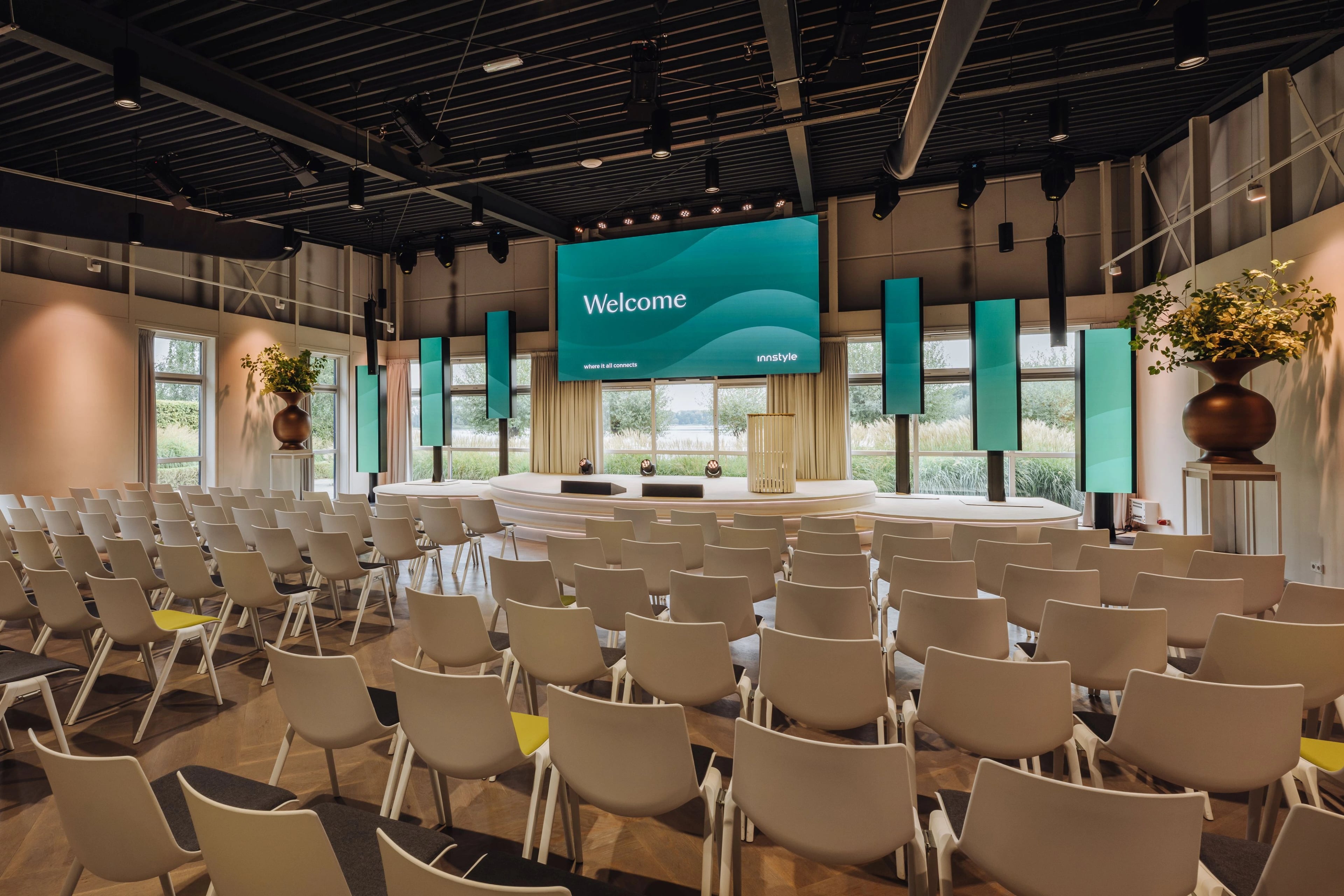
In nature, you see something different happen. Simply arriving at a venue makes a difference. People respond to the space, the views and the tranquillity. That initial feeling immediately sets the tone for the rest of the day.

Four specific differences between a team-building venue in the city and one in nature
Difference 1: the goal - practical or focused on connection?
A city venue works well when the day needs to be primarily practical. Think of a meeting focused on sharing information, or a programme where ease of access is the priority.
As soon as the goal shifts towards connection, the considerations change. Businesses that deliberately choose a venue in natural surroundings are looking for precisely that difference. Not just a well-organised day, but an experience that sets something in motion.
Difference 2: participant behaviour - work mode or openness?
The biggest difference is reflected in people's behaviour. In an urban setting, people often stay more firmly in their professional roles. The surroundings are familiar, sometimes even close to the office, which means conversations tend to remain functional. The day is enjoyable, but stays on the surface.
That changes in natural surroundings. By physically stepping out of their everyday setting, people have the space to let go. The atmosphere becomes more informal, people relax more quickly and conversations naturally become more personal.
'People respond differently to the views, the peace and the space as soon as they arrive. That is no coincidence. They open up when they feel they are truly somewhere different.'
Difference 3: the activities - limited or varied?
In the city, opportunities for genuine team building are often limited. Activities take place away from the venue and are therefore less focused on collaboration within the group.
In natural surroundings, there is room for a full programme. At InnStyle, we combine active and less active elements: dragon boating, laser tag, a chain reaction workshop, clay pigeon shooting, canoeing or something creative such as a graffiti workshop. That way, there is always something for the sporty participants as well as those who prefer to stay indoors.
The strength lies not in how spectacular an activity is, but in people doing something together. Working together, discussing ideas and a little competition help teams get to know one another in a different way.
Difference 4: the impact - an enjoyable day or something that stays with you?
Perhaps the most important difference lies in what remains afterwards.
Many clients who previously organised team building in the city look back on it positively, but often without any lasting effect. It was enjoyable and well organised, but changed little about how people work together.
With team building in natural surroundings, I more often hear that the effects last longer. Teams have shared an experience, and that is reflected in the workplace: in their communication, collaboration and mutual understanding.
So the difference lies not in how enjoyable the day is, but in the effects you still notice afterwards.
Accessibility and costs: the practical considerations
Of course, practical matters also play a part. A city venue is easier to reach by public transport, especially when people are coming from across the country.
A venue in a natural setting can sometimes be further away. But that distance also has an advantage that I see time and again in practice: the journey gives people time to switch gears mentally. They leave the working day behind, which happens far less readily in the city.
'How much fun is it to arrive together on a shuttle bus or coach? The team building starts on the way.'
For groups who find public transport a challenge, we are happy to help find a solution. We regularly arrange shuttle buses, for example from Utrecht Centraal or Overvecht, so that getting here is not an obstacle.
As for costs: a city venue may sometimes seem cheaper, but that depends very much on what is included. Activities, technical equipment and catering are more often listed separately in the quote. At InnStyle, everything is included, including staffing costs. So always ask exactly what is and is not included before comparing quotes.
When should you choose each type of team-building venue?
The choice only becomes truly clear when you return to your goal.
Choose a city venue if the day needs to be efficient above all, if content and information are the main focus, if access by public transport is the deciding factor, or if a short activity alongside a business programme is enough.
Choose a venue in nature if you want people to truly switch off, if connection and collaboration are the goals, if you want an active and varied programme, or if you want the day to have an impact that you can still feel back in the workplace.
It is not about which is better, but about which works better for what you want to achieve.
When is a team-building day truly a success?
For me, success starts before the day itself: when a client responds enthusiastically to the programme, when registration runs smoothly, when everything is set up just as it should be.
But I see the real signs on the day itself. When groups throw themselves into the activities. When colleagues who normally barely speak to each other suddenly work together on the chain reaction. When someone who arrived looking a little reserved in the morning is laughing and chatting over drinks at the end.
'You can recognise a successful team-building day not by how smoothly the programme ran, but by the energy people leave with. If they leave happier than when they arrived, you know the day has done more than simply entertain them.'

Checklist: which team-building venue suits your team?
Would you like more guidance to help you make your choice? Use this checklist.
City | Nature |
You want an efficient, practical day | You want a day that makes an impact and brings people together |
Content and the programme take centre stage | The experience and team spirit take centre stage |
People can stay in work mode | People need to switch off from work |
Conversations can stay task-focused | You want open and personal conversations |
A short activity alongside the programme is enough | You want active and varied team building |
Limited time available | Time for a full-day programme |
A sociable atmosphere is enough | You want genuine connection within your team |
Impact does not have to be long-lasting | You want an effect that lasts |
Public transport access is crucial | Travelling a little further is no problem |
Everyone travels individually | Group transport works well |
You mainly compare prices | You look at overall value and impact |
You arrange each element separately | You want an integrated programme |
Do you mostly find yourself in the left-hand column? Then a city venue is probably a better fit for your goal. Do you identify more with the right-hand column? Then a team-building venue in nature is the stronger choice.
Choosing a team-building venue: city or nature, which works better for your team?
There is no single answer to that question, but weighing up the options is less complicated than it seems.
After hundreds of conversations with clients and thirty years of business events at InnStyle, it always comes back to the same thing: it is not about the venue itself, but about the effect you want to achieve. The same group of people can experience a completely different day in two different places.
Choose the city, and you choose convenience, structure and efficiency. Choose nature, and you choose space: to unwind, to share an experience, to build connections that last beyond that one day.
Once you know what you want to happen, the right choice follows naturally. And if you are not quite clear on that yet, we are happy to help.
At InnStyle, we have been helping clients shape events that make a real difference for thirty years, from the first coffee to the final round of activities. Send us an enquiry, and I will work with you on a programme that suits your goals, group and budget.